

Between Presence and Absence: The Art of Mario Balsamo
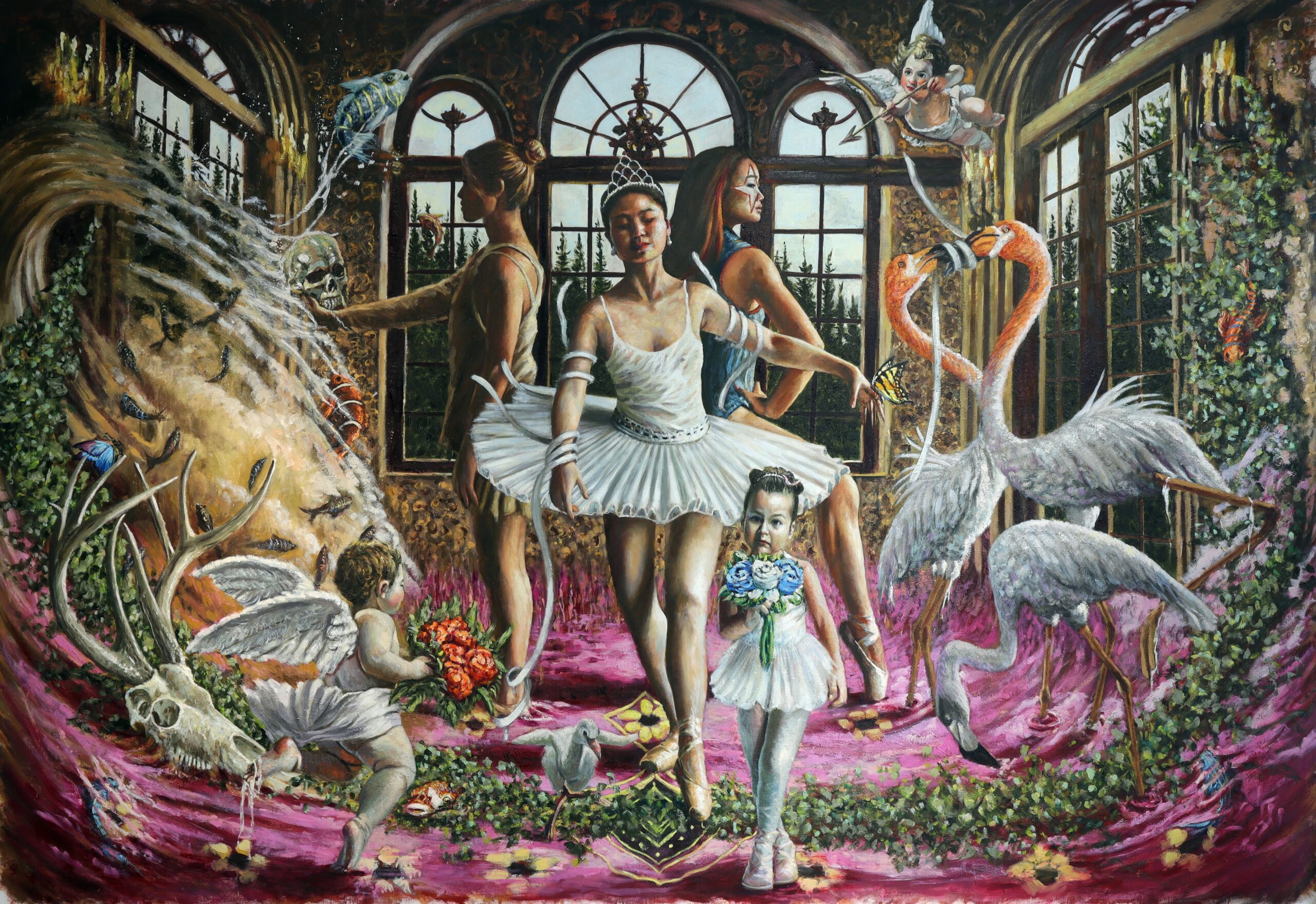
Photo Credits: Mario Balsamo & Patrizia Donnicola
In an age dominated by hyper-visibility and constant distraction, I find myself gravitating toward what is withheld, what remains unspoken, suspended, or fractured. My recent body of work investigates the psychological threshold between what we perceive and what we intuit: a silent language shaped by memory, isolation, and dreams.
The figure in my paintings does not perform or announce itself. It emerges from and dissolves into the environment, becoming both subject and atmosphere, sometimes fully formed, sometimes fragmented, often both at once.
I was born in Italy and raised among the remnants of ancient architecture, religious iconography, and Renaissance technique.
Those visual and cultural codes shaped my sensibility, particularly their interplay between the sacred and the mysterious. Now, based in Malaysia, I feel the tension and dialogue between East and West, between classical structure and surrealist rupture. My paintings seek to hold that tension without resolving it.
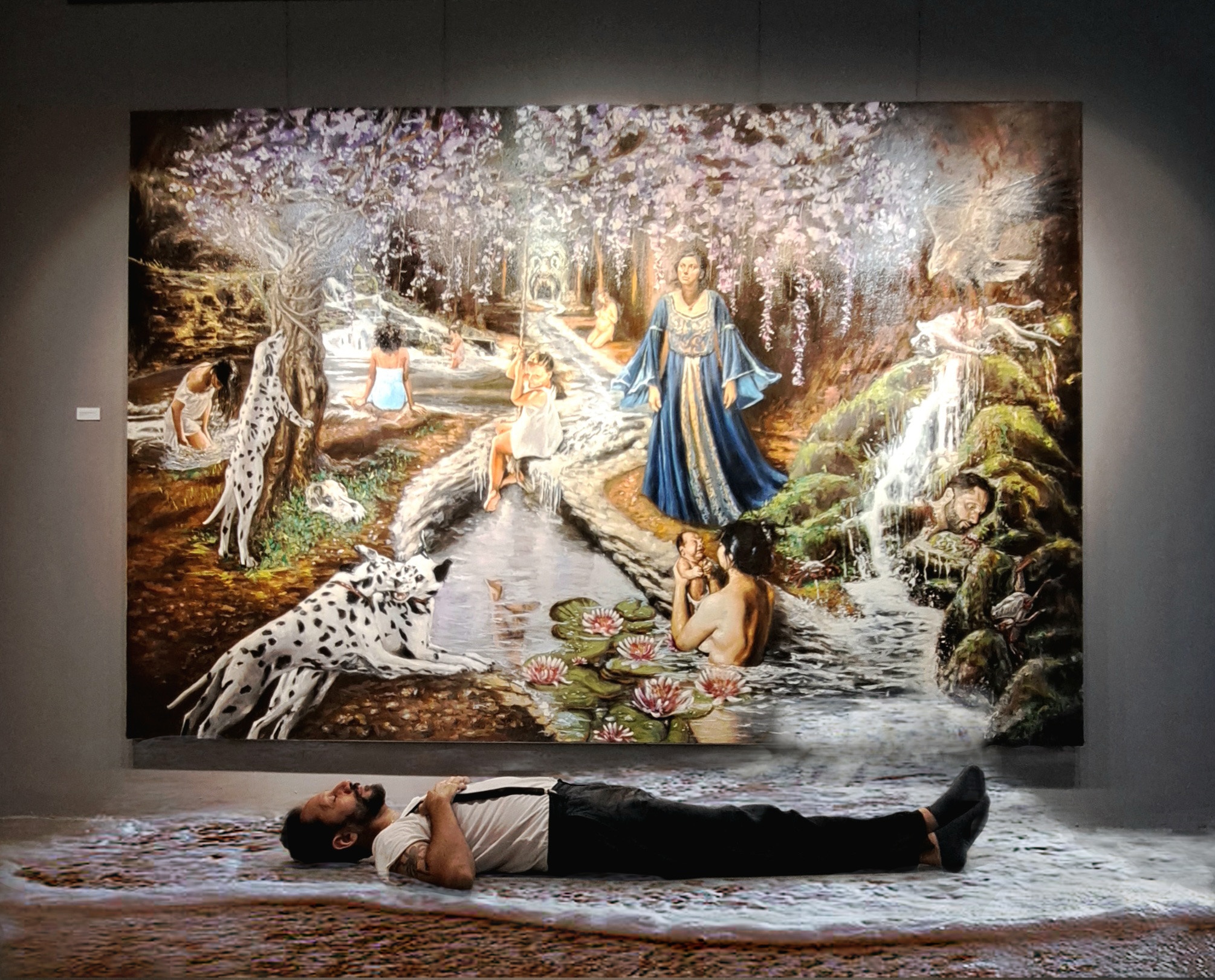
Photo Credits: Mario Balsamo & Patrizia Donnicola
My influences are diverse. I am drawn to the metaphysical stillness of Giorgio de Chirico, the poetic ambiguity of Balthus, the interior drama of Lucian Freud, and the dreamlike allegories of Salvator Dali. But I also find equal inspiration in silence, in long walks, in the moment right before waking. That is where most of my compositions begin, not with a sketch, but with a sensation: an emotional architecture that later becomes populated with figures, thresholds, shadows, and recurring symbols.
The works featured in this series, titled Where the Figure Breaks, are part of an ongoing exploration of identity and disappearance. These are not portraits in the conventional sense.
Instead, they are meditations on presence. Each figure appears poised on the edge of transformation or collapse. In some, the body is overtaken by foliage or architecture. In others, it dissolves into the negative space surrounding it. I am interested in that liminal zone, the psychological weather behind the face, beneath the skin, where the self begins to dissolve into something collective or archetypal.
Technically, my process is slow and deliberate. I work primarily in oil, using classical layering methods, glazing, underpainting, and scumbling, while deliberately disrupting them at certain stages. The canvas becomes a site of resistance as much as a revelation. Sometimes I scrape down a section that feels too resolved; sometimes I obscure clarity with a veil of muted tones. These gestures are not decorative but conceptual, they mirror the instability of the psyche, the way we remember imperfectly, the way we hide from ourselves.
Symbolism plays a quiet but essential role. Chairs, mirrors, open windows, birds, and architectural ruins frequently recur, not as narrative devices, but as emotional cues. I am less interested in storytelling than in mood, less in resolution than in suggestion. Each object or gesture is a node in an invisible web of meaning. The viewer is invited to intuit rather than decode, to dwell in ambiguity.
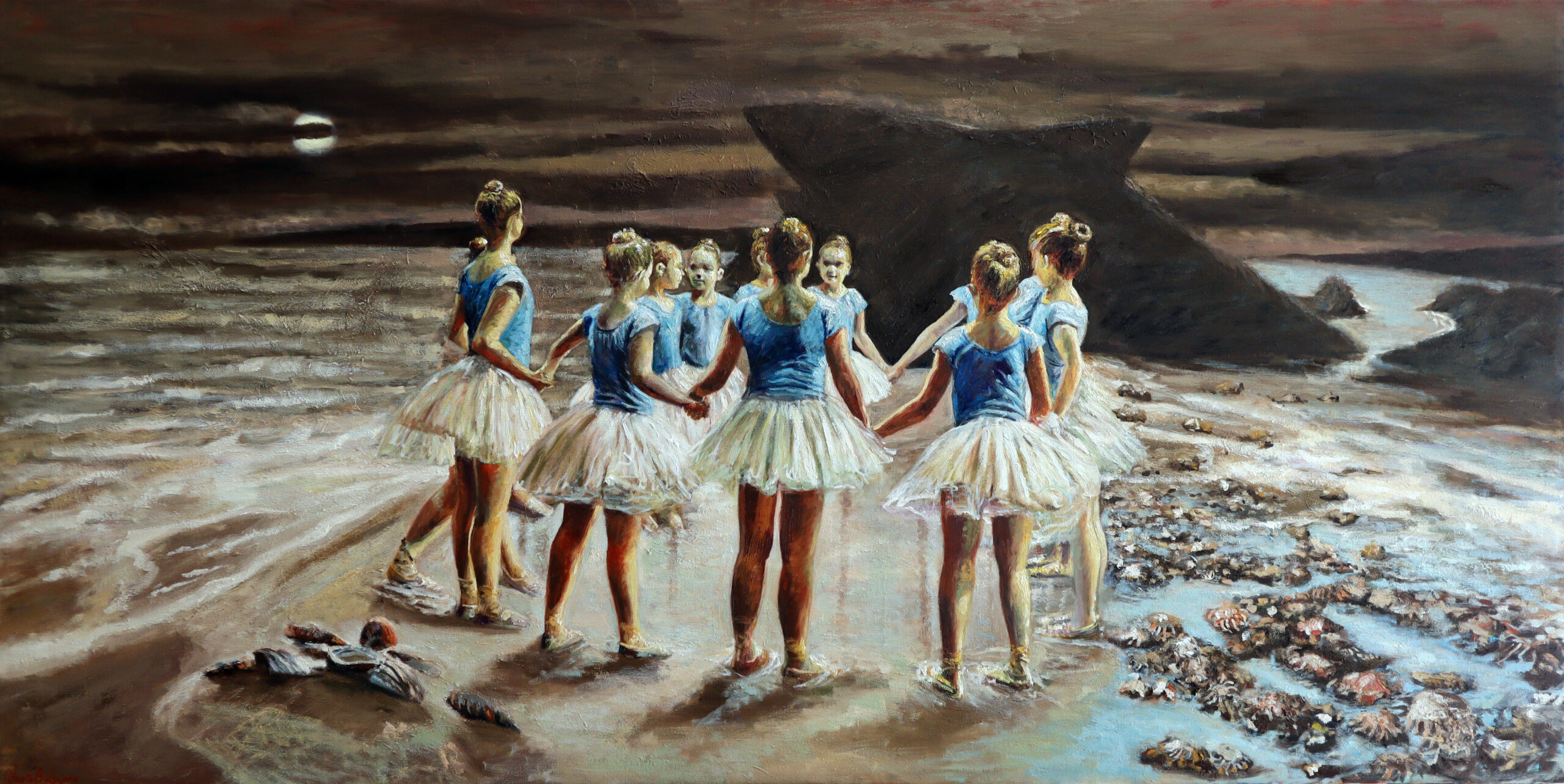
Photo Credits: Mario Balsamo & Patrizia Donnicola
Living in Kuala Lumpur has deepened my attention to environmental mood, monsoon skies, sudden silences, and light filtered through wooden shutters. It has also shifted the palette I work with: ochres and dusty greens now echo the surroundings outside my studio. The local pace of life allows a certain inwardness, a time to linger with the image as it unfolds. That slow unfolding is essential to my process.
Art, for me, is a form of listening. Each painting asks a question I cannot yet articulate. I paint not to illustrate what I already know but to approach what I do not. In that sense, the canvas becomes a mirror, not of the world, but of the viewer’s internal landscape. My hope is that each work acts like a quiet interruption, a pause in the rhythm of looking, where silence might speak louder than the figure.
Author: Mario Balsamo