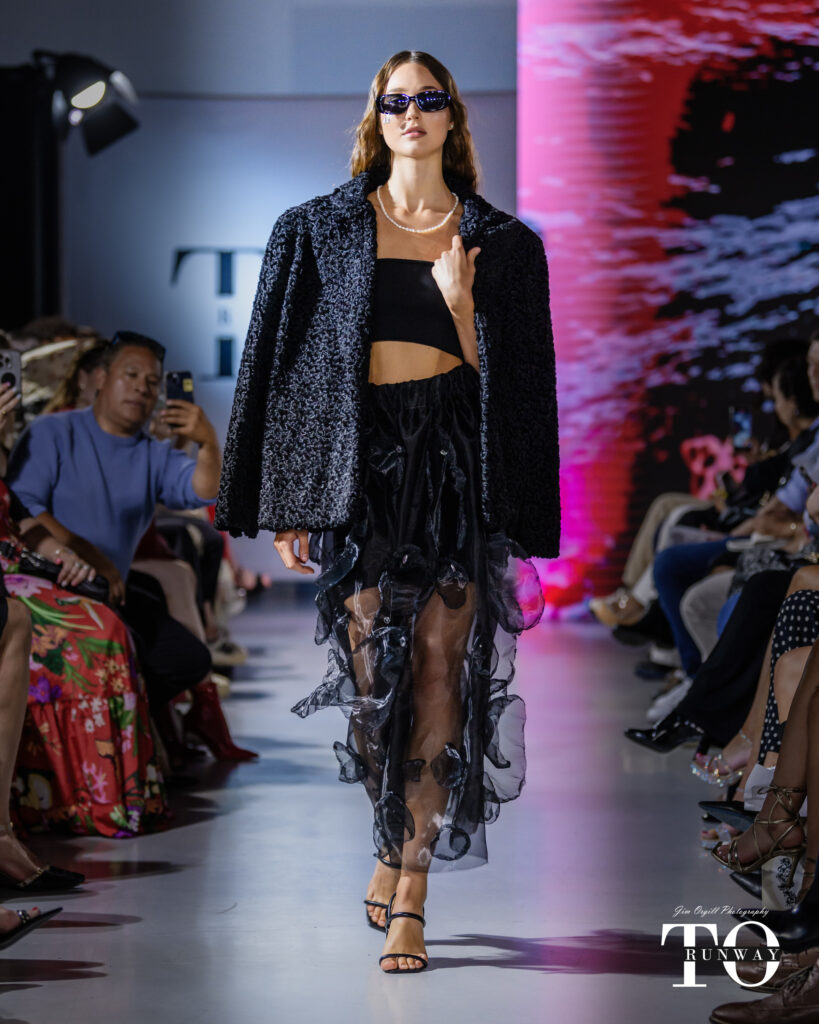


Vancouver Fashion Week SS27
From cultural heritage to experimental design, Vancouver Fashion Week explored the many directions of contemporary fashion.
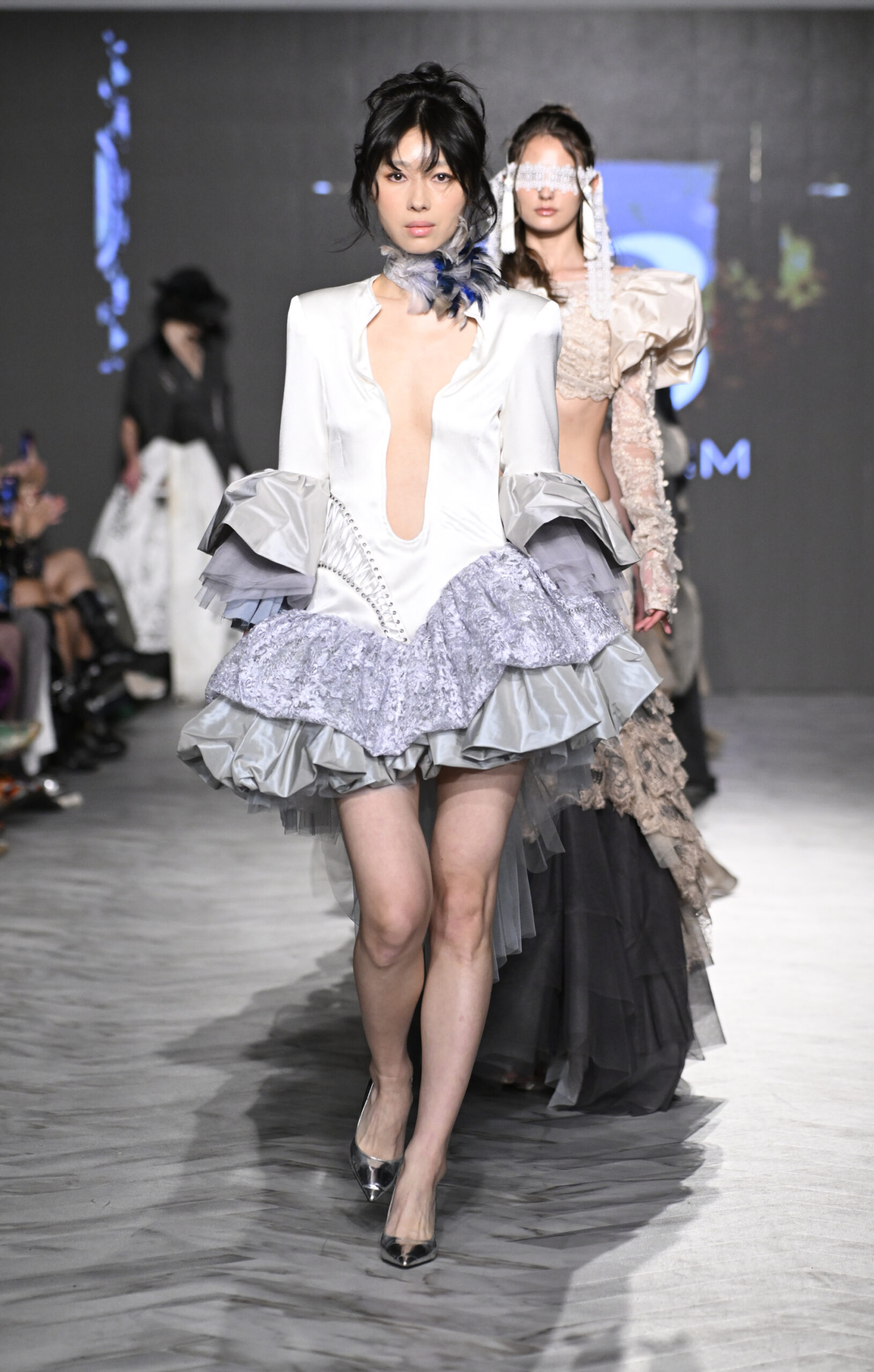
Bella Kim
Vancouver Fashion Week returned to David Lam Hall from October 14, 2026, bringing together Canadian and international designers for five days of Spring/Summer 2027 presentations. Across the runway, collections explored identity, craftsmanship, cultural heritage and the possibilities of contemporary design.
The opening night featured Vancouver-based designer Richard Wei, whose Fashion is Art collection combined sculptural silhouettes, flowing drapery and couture-inspired embellishments. Brunette The Label, founded by Miriam Alden, offered a contrasting perspective with relaxed tailoring, textured fabrics and a palette of plum, espresso and oatmeal.
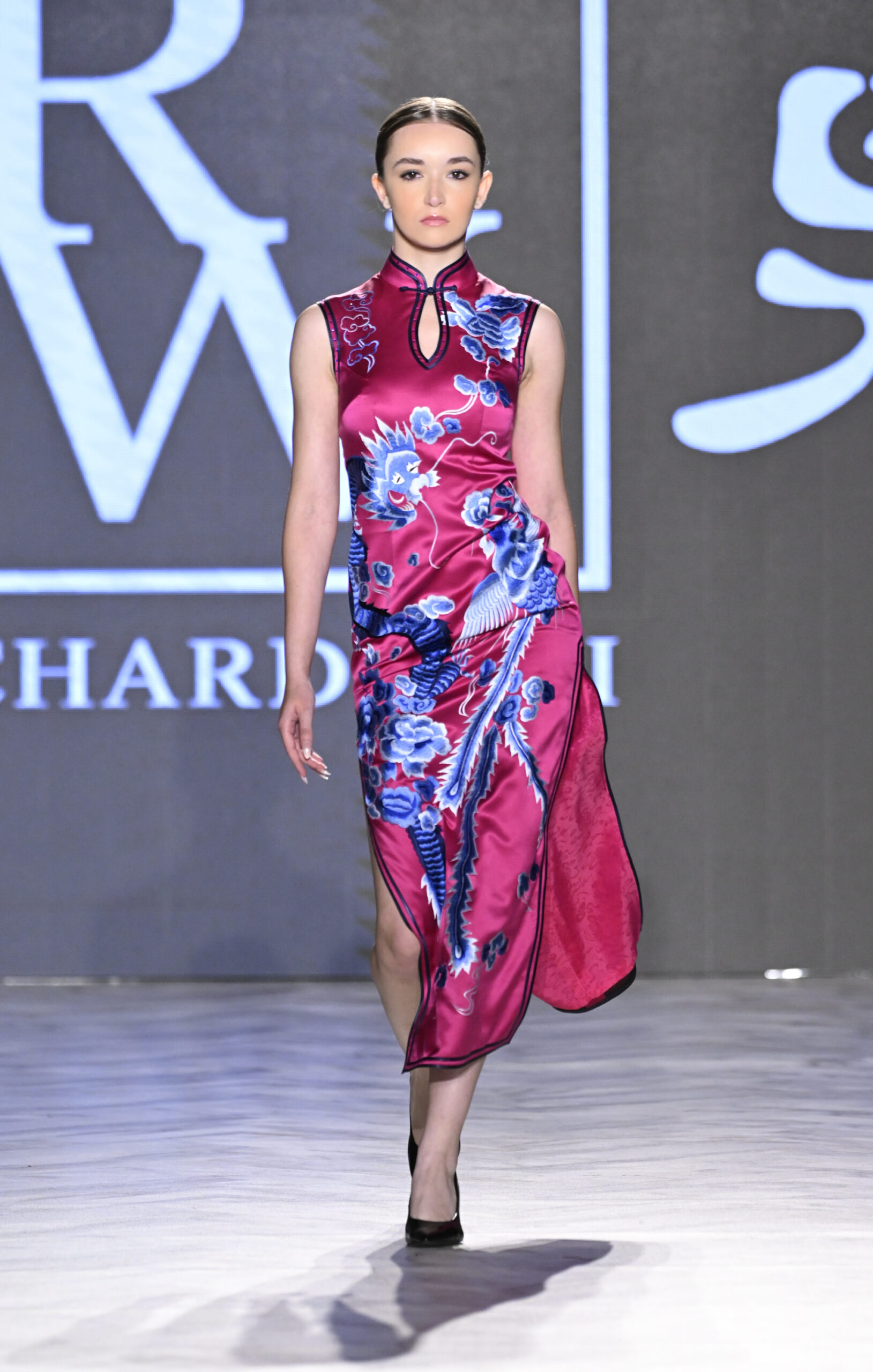
Richard Wei
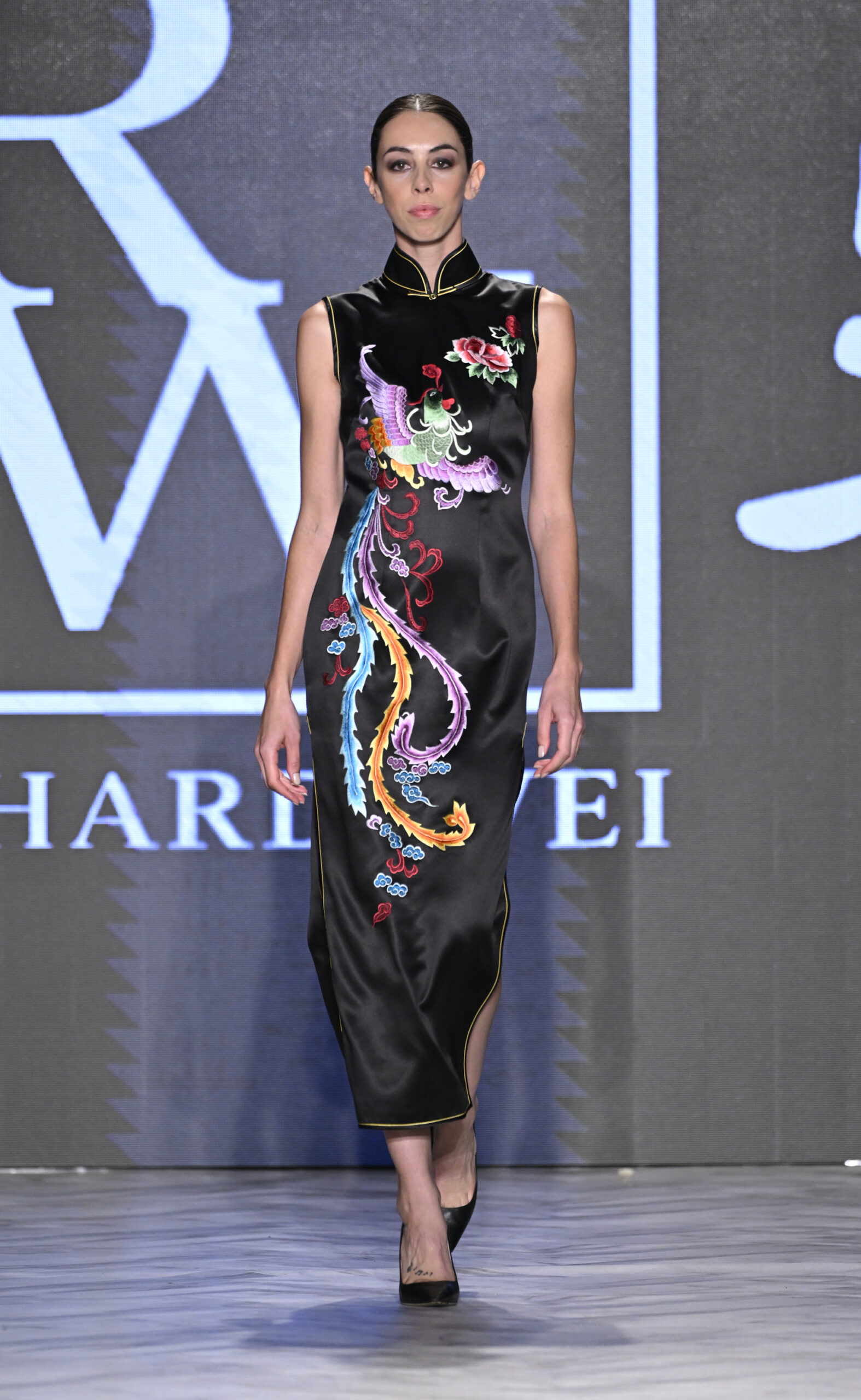
Richard Wei
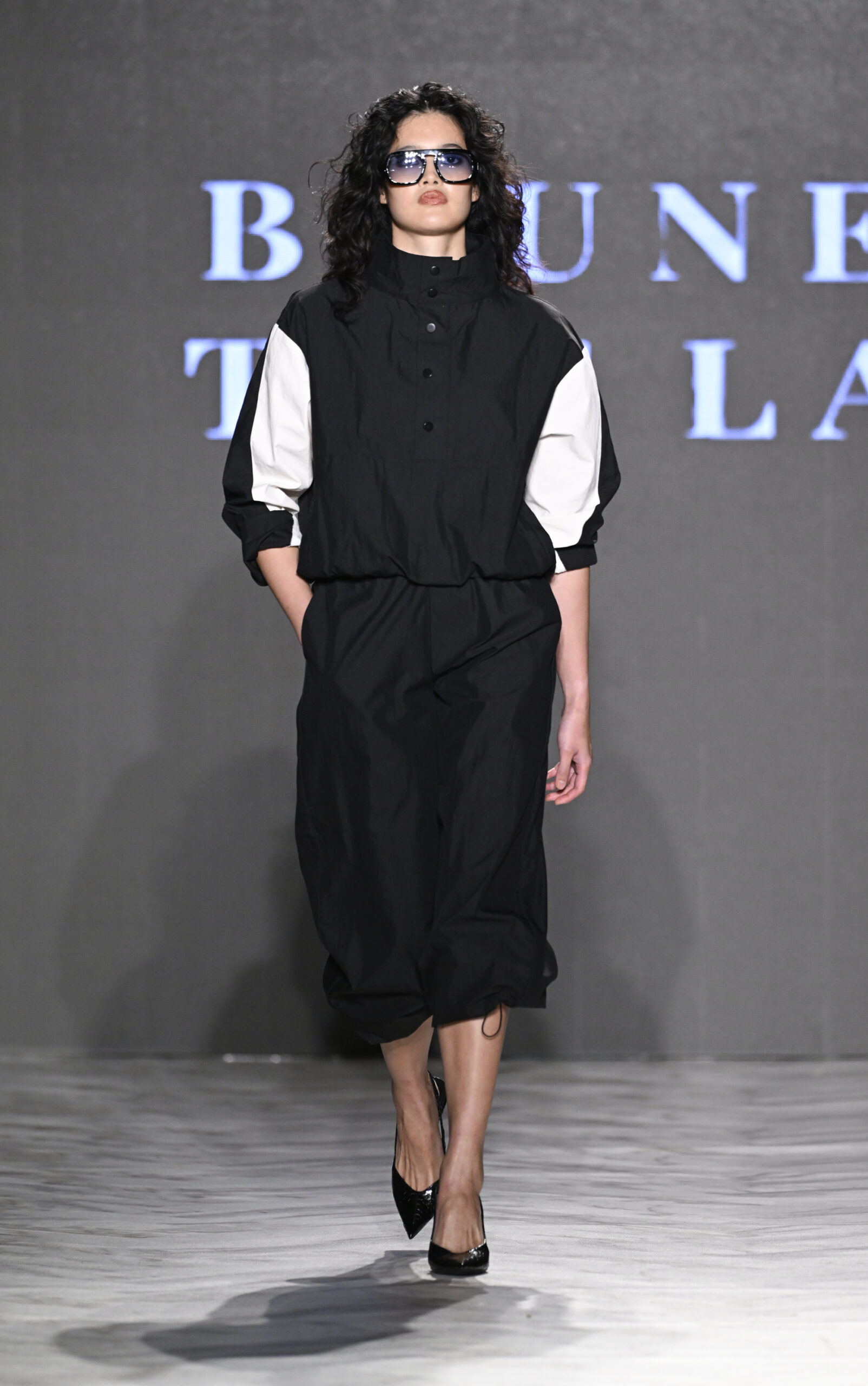
Brunette The Label
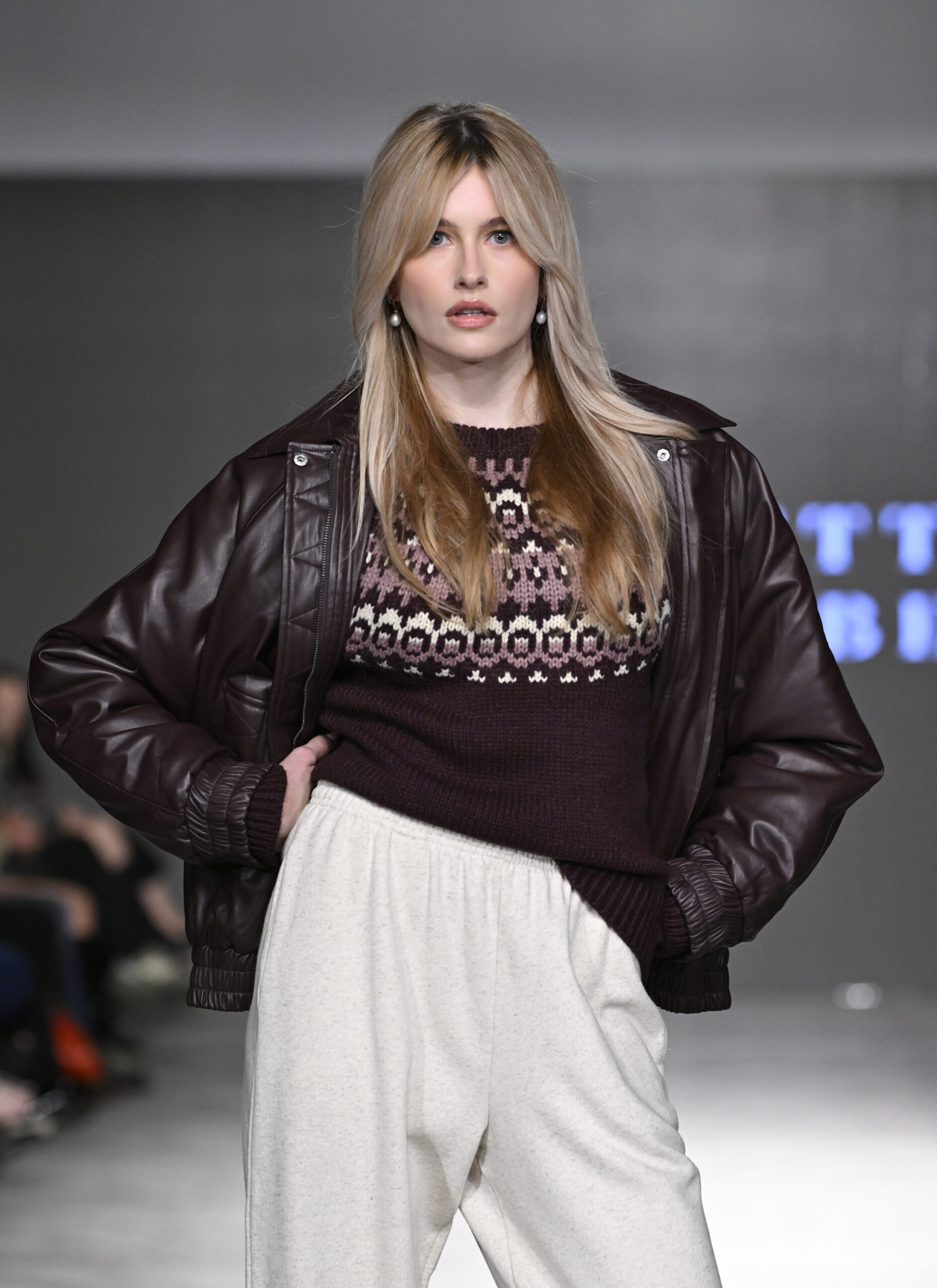
Brunette The Label
Fashion as Cultural Expression
Several designers turned to personal and cultural histories as the foundation of their collections.
Reggie Harrold drew on her Dene and Secwépemc heritage in The Sinews of Our Souls, incorporating artificial sinew, beadwork and sculptural construction into contemporary garments. Ellena Veracruz Henriquez, presenting under VERACRUZ, explored Chicano zoot suit culture and her Salvadoran and Chilean roots through the 12-look collection LA CULTURA.
Brazilian-born designer Gustavo Neri brought elements of his homeland to menswear with ORIGENS. Linen, cotton, embroidery and patchwork appeared alongside relaxed tailoring and warm, earthy colours.
Historical influences also shaped Jade McBride’s Madame Sans Culotte, which reinterpreted eighteenth-century fashion and the women of the French Revolution through corsetry, romantic silhouettes and rebellious details.
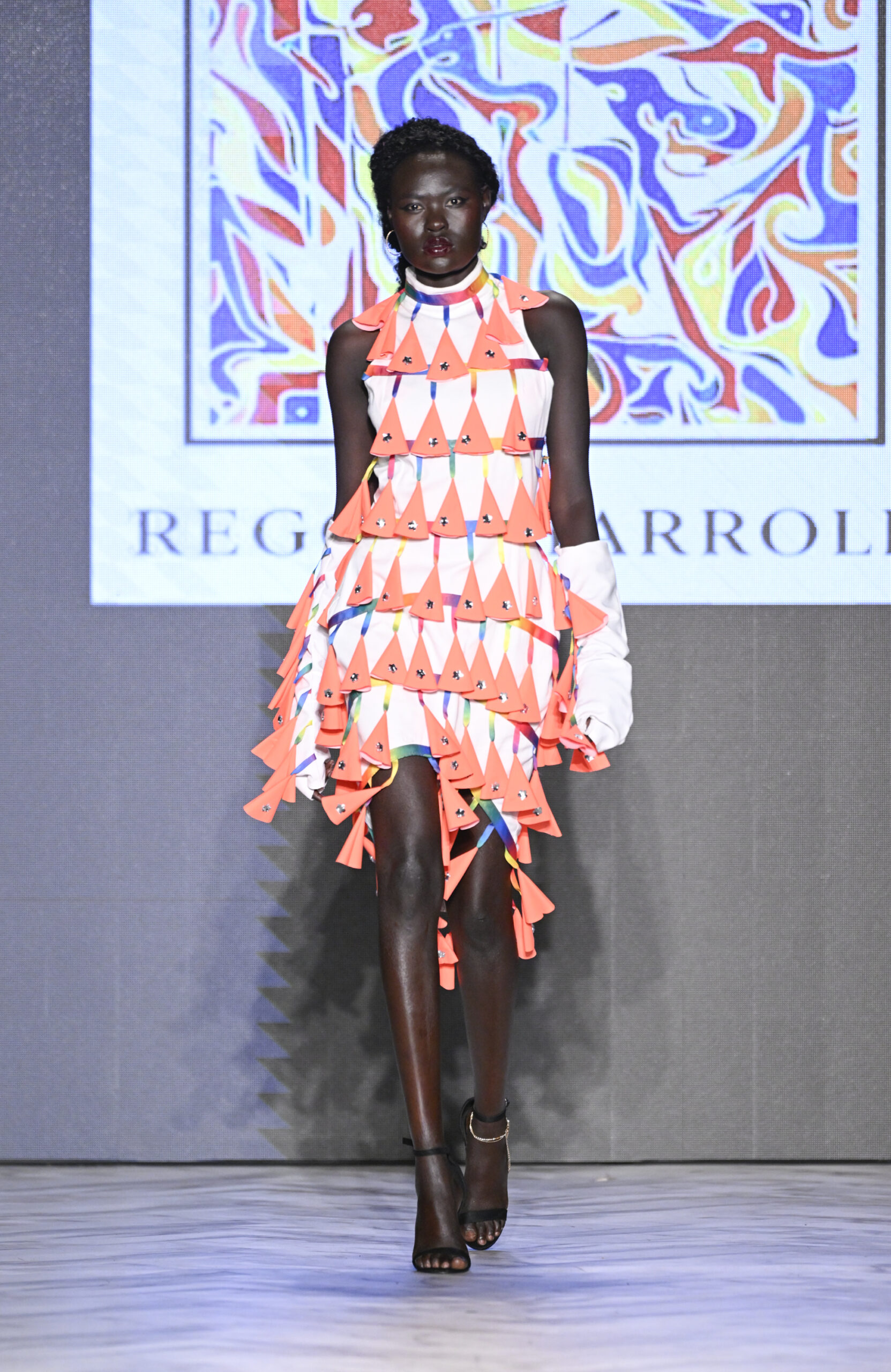
Reggie Harrold
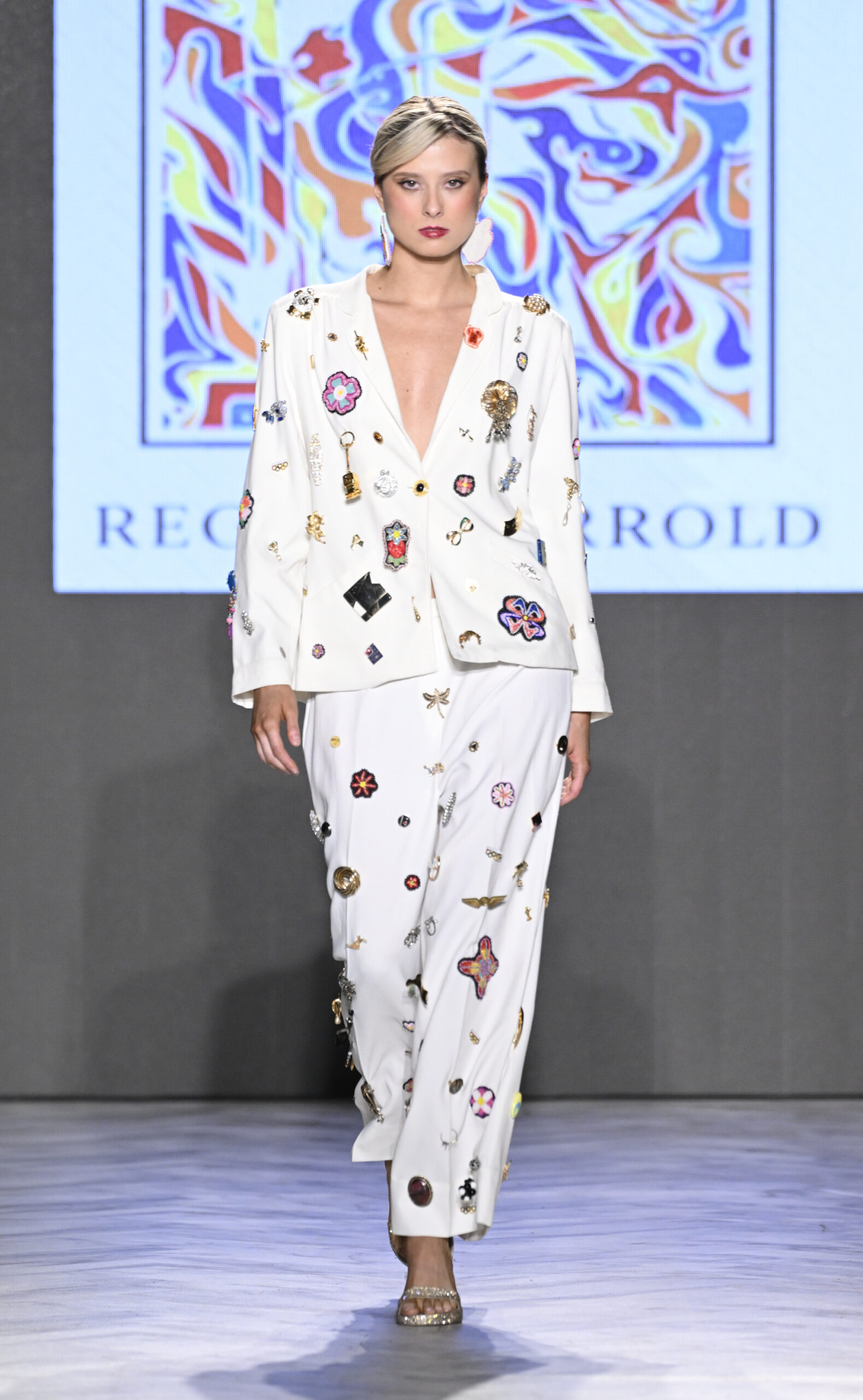
Reggie Harrold
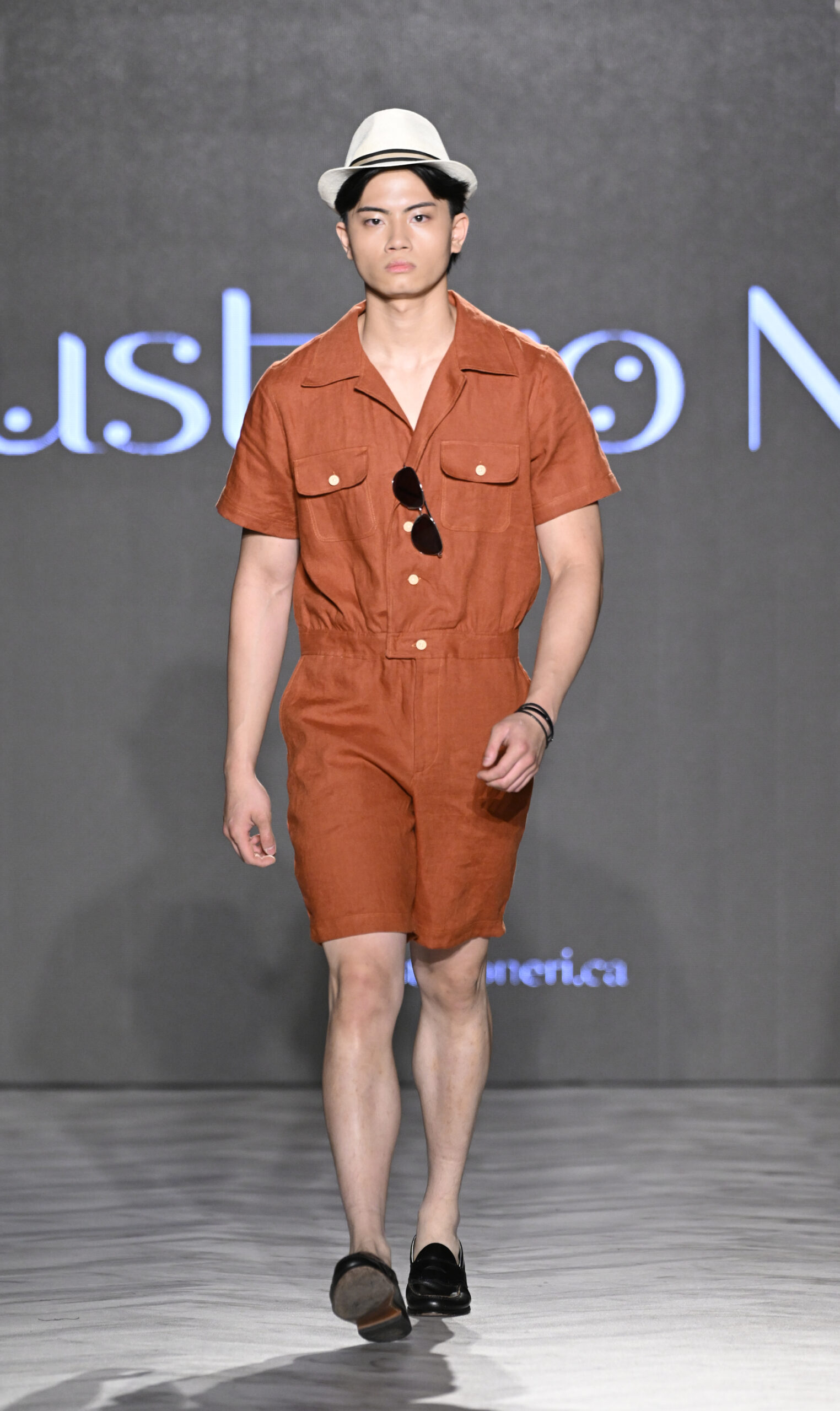
Gustavo Neri
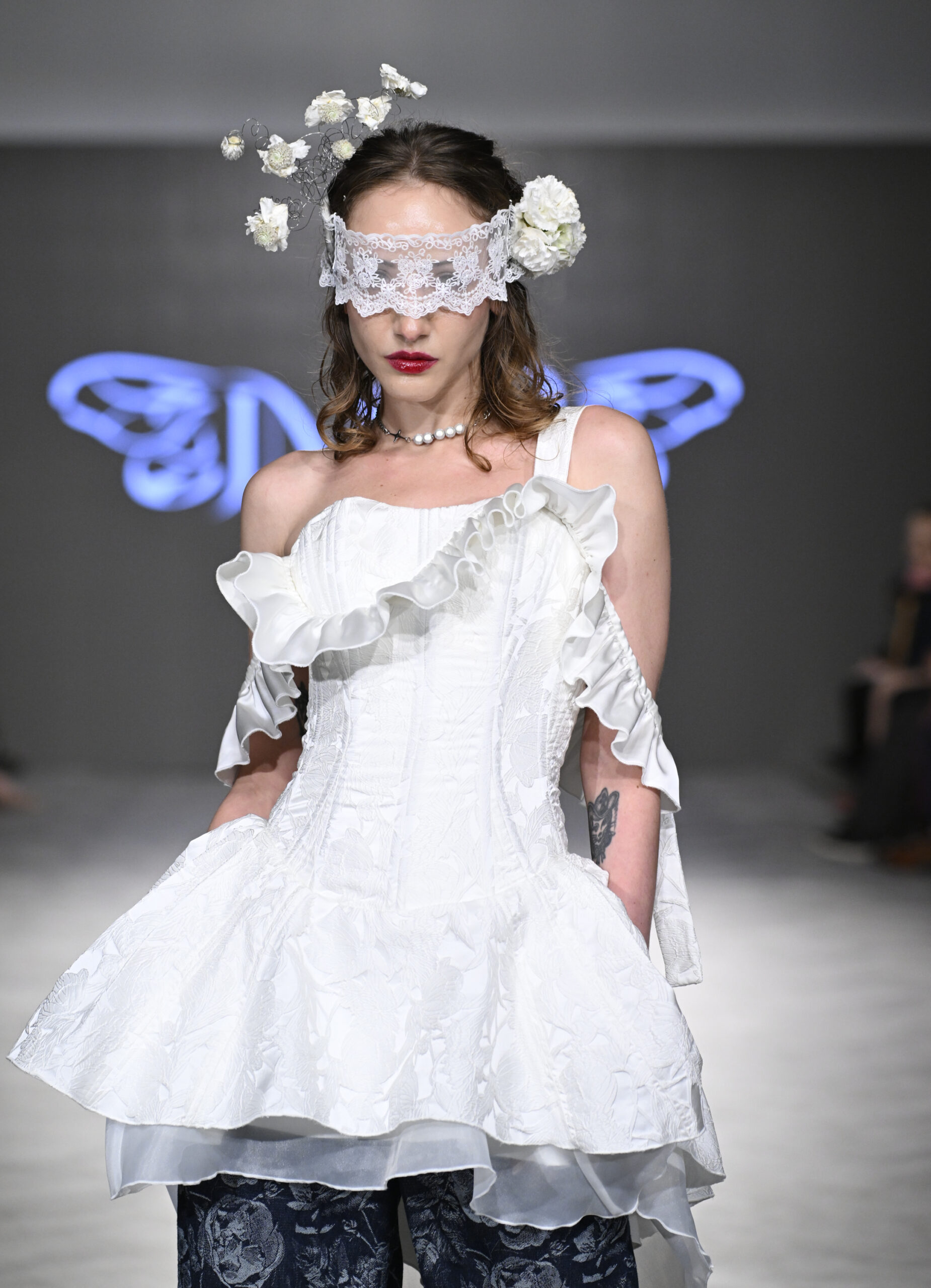
Jade McBride’s
Experimentation on the Runway
Material innovation and unconventional construction offered another direction for the season.
Luisa Fernanda Castillo Alzate explored the relationship between nature and technology in Fitomorfosis, using laser-cut fabrics, layered surfaces and hand-frayed textiles. Leidy Laura Rendón Cardona drew from biomechanics and the Fibonacci spiral to create sculptural garments informed by movement and anatomy.
South Korean label BULLIT combined references to protective equipment and military wear with architectural volumes and technical detailing. Meanwhile, Galactic Gala embraced space-age aesthetics through reflective metallic fabrics, exaggerated proportions and electric-blue accents.
Streetwear also took an experimental turn.
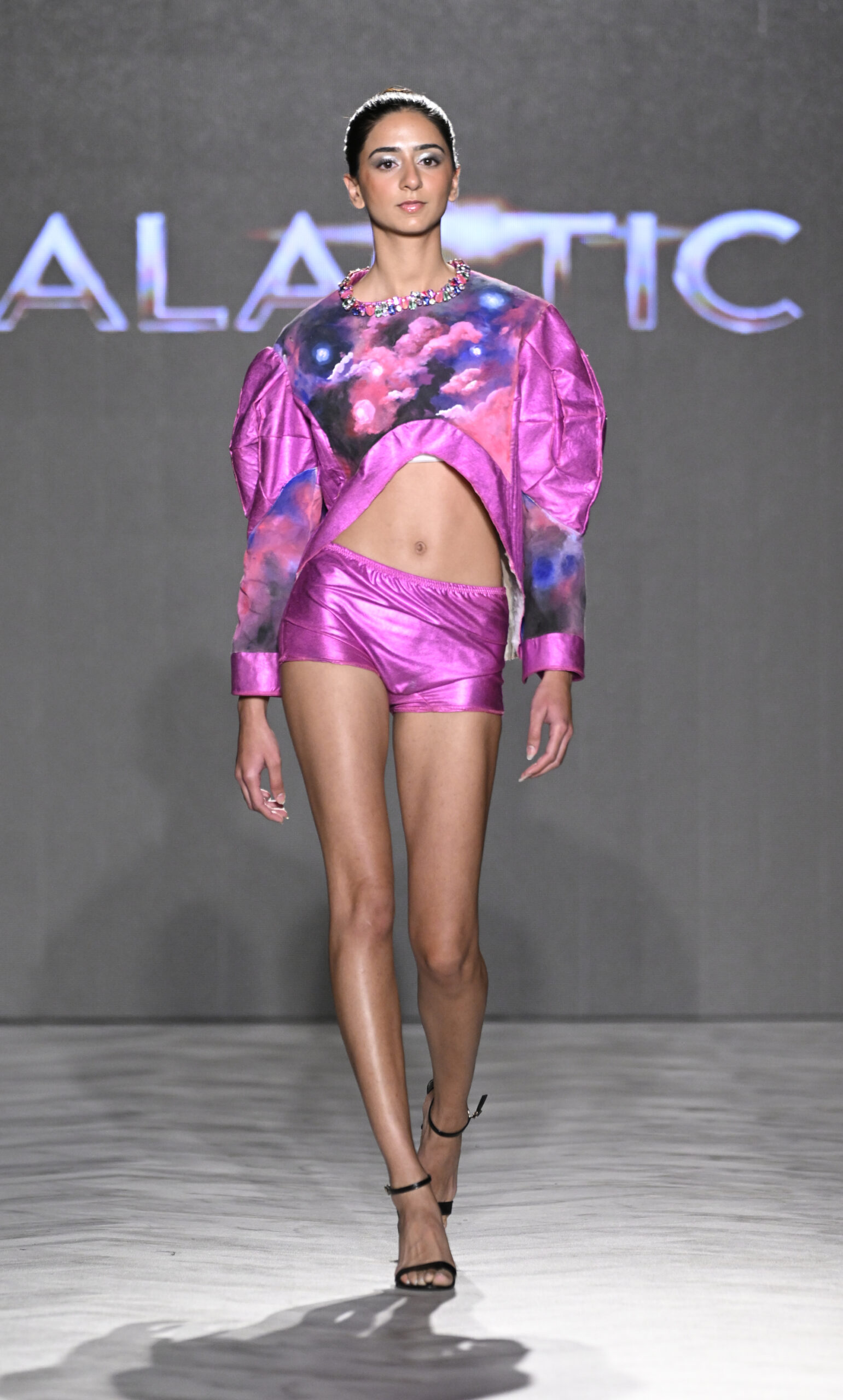
Galactic Gala
presented graphic prints, distressed textures and unconventional layering, while VICCORE brought together influences from gaming, hip-hop and cosmic exploration.
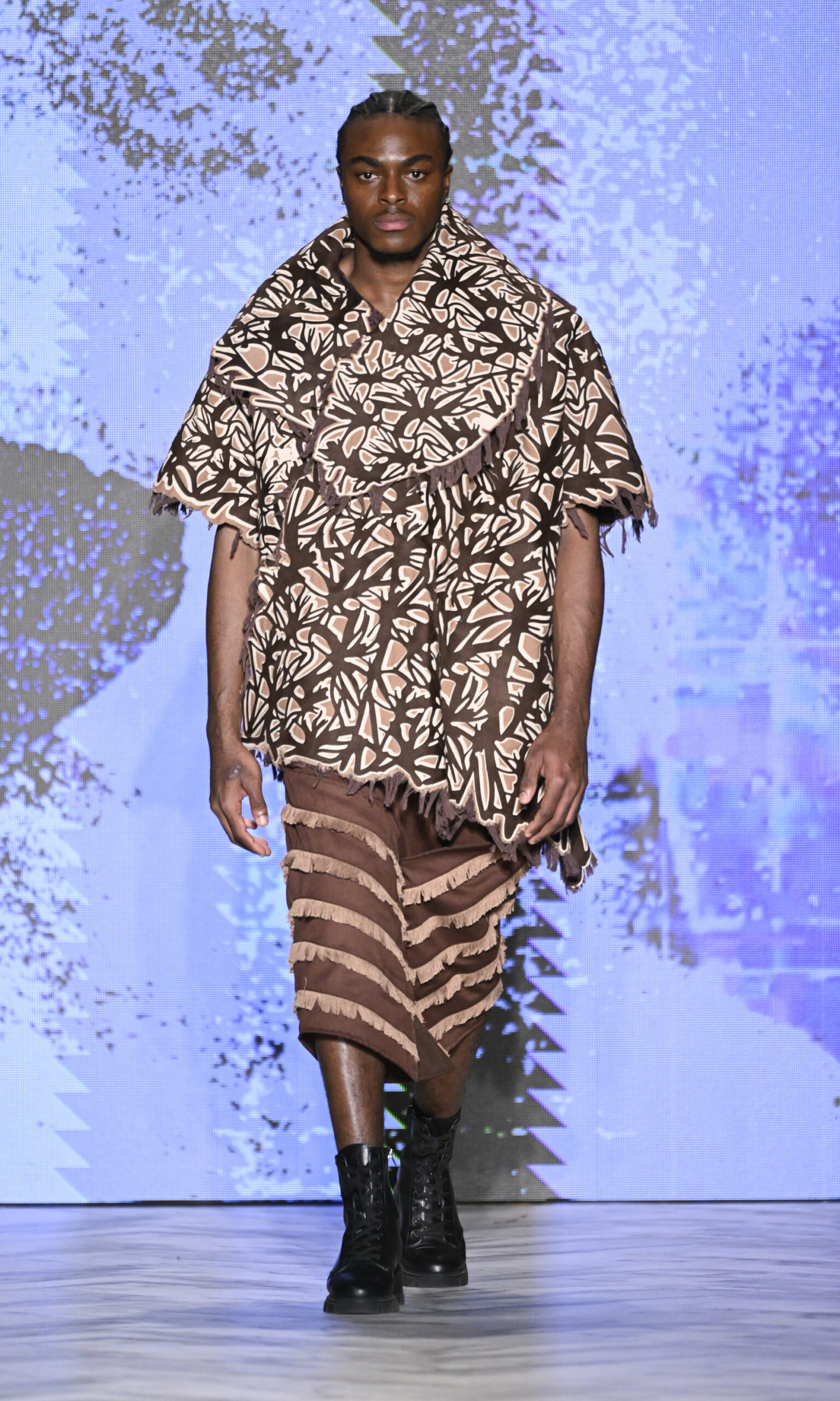
Luisa Fernanda Castillo Alzate
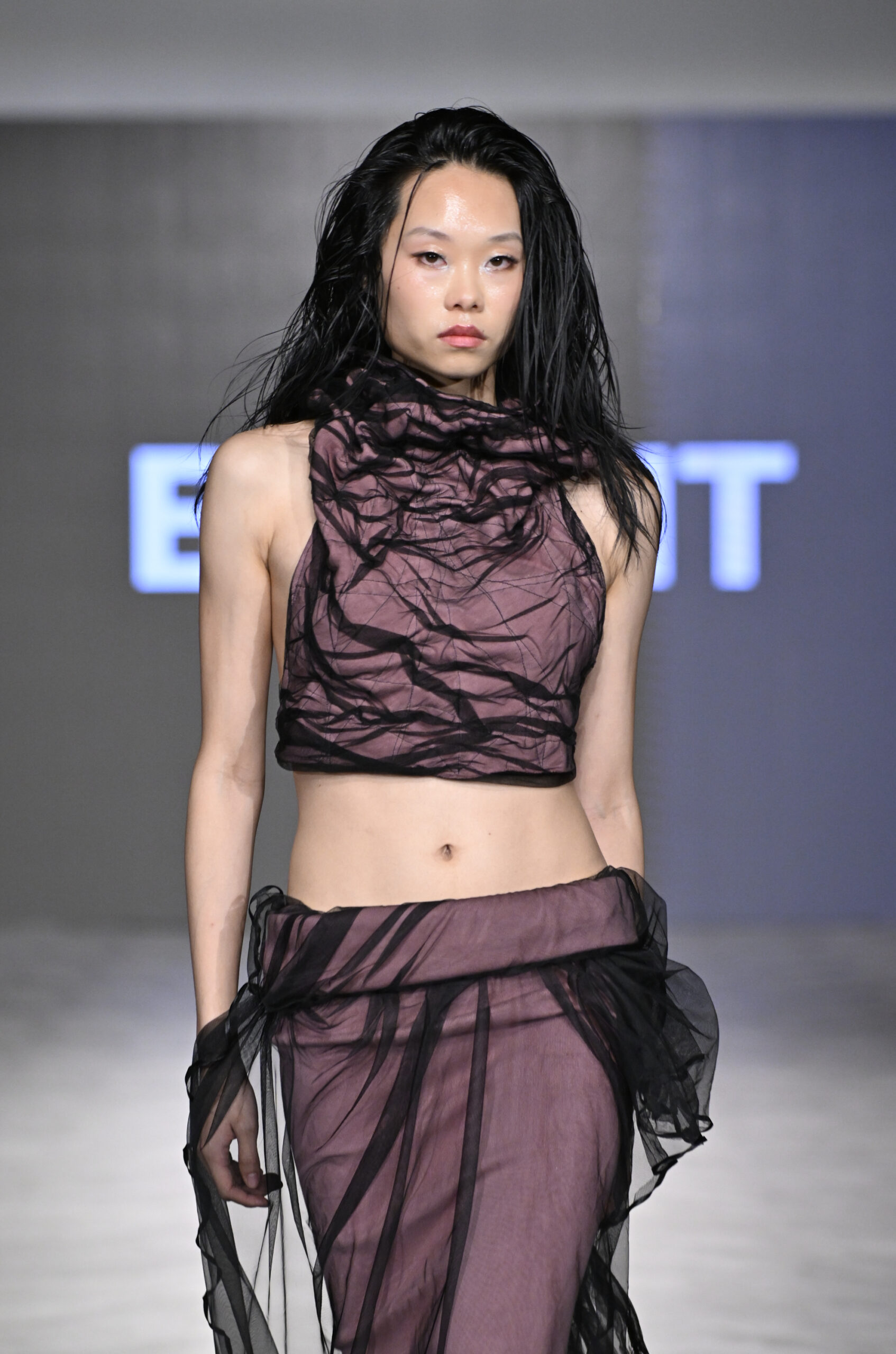
BULLIT
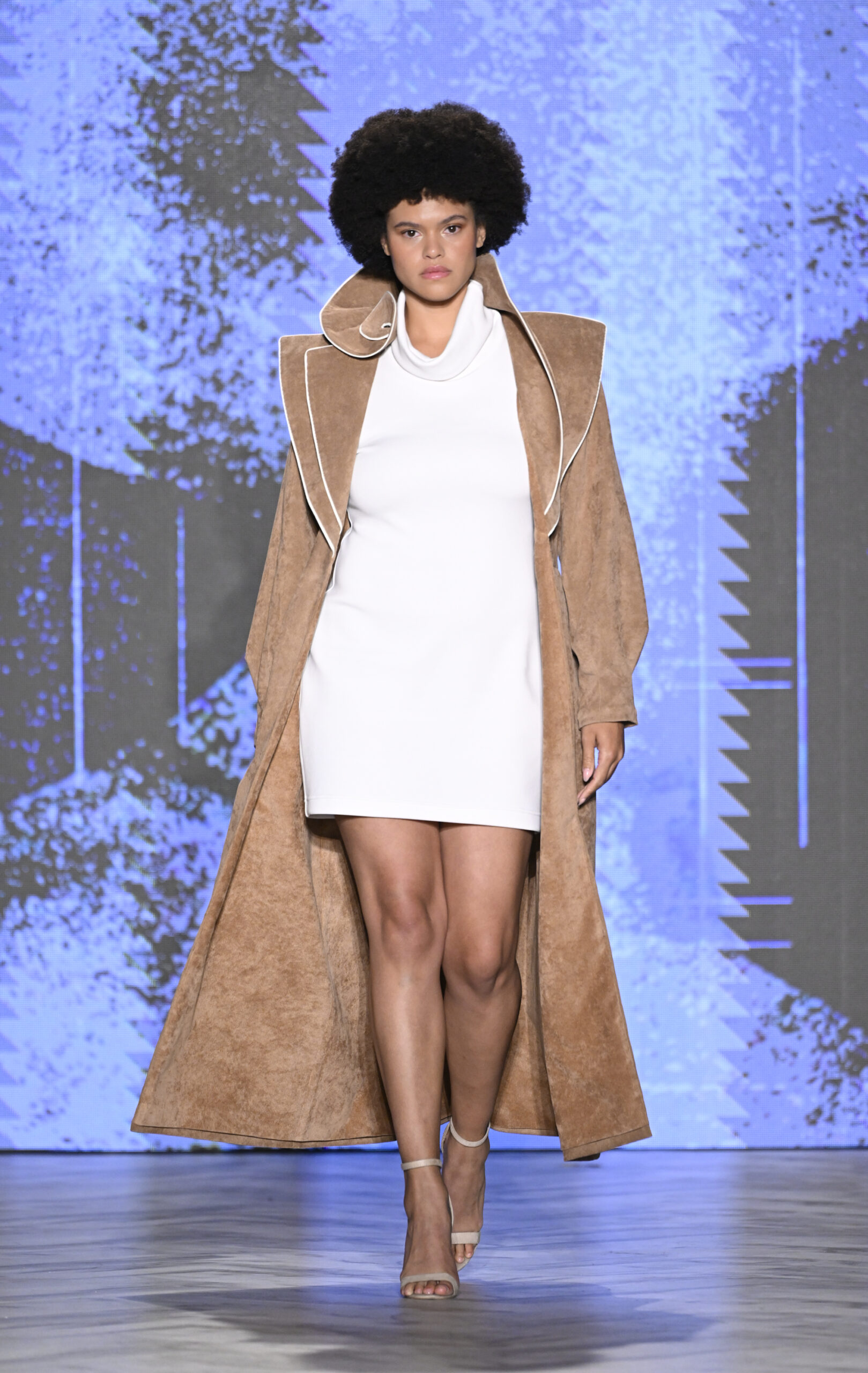
Leidy Laura Rendón Cardona
New Perspectives on Femininity
Designers approached femininity through contrasting ideas of strength, romance and self-expression.
Somaya Fashion Studio’s Threshold explored transformation through architectural shapes and fluid silhouettes, with mature models reinforcing the collection’s inclusive perspective.
Ocean-inspired textures defined Delayne Dixon’s In the Shallows, where sculpted corsetry, pearls and iridescent finishes created a balance between structure and softness. Moe Ghrbal Couture took a more traditional eveningwear approach with Dawn, moving from dark tones to luminous gowns embellished with crystals and beads.
House of Pretty explored sensuality through black lace, sheer fabrics and metallic contrasts, while Emma Ireland Designs challenged conventional expectations of femininity in The Feminine Gaze, combining playful silhouettes with social commentary.
For Naya El Ahdab, fashion became a way to reconsider the relationship between clothing and the body. Her collection Levez-vous, informed by her experience as a paraplegic woman, incorporated knitwear and chair-inspired constructions designed around the seated form.
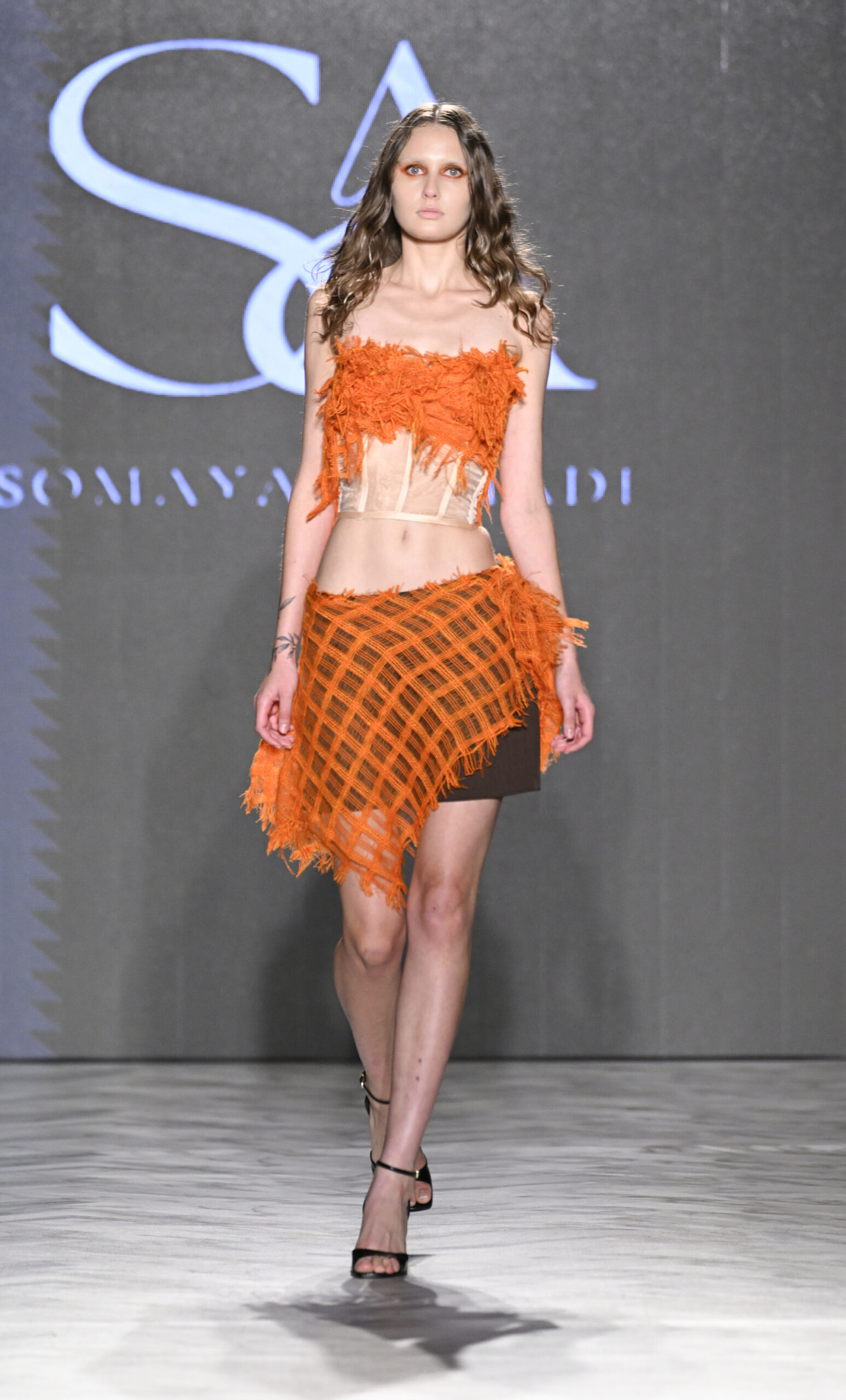
Somaya
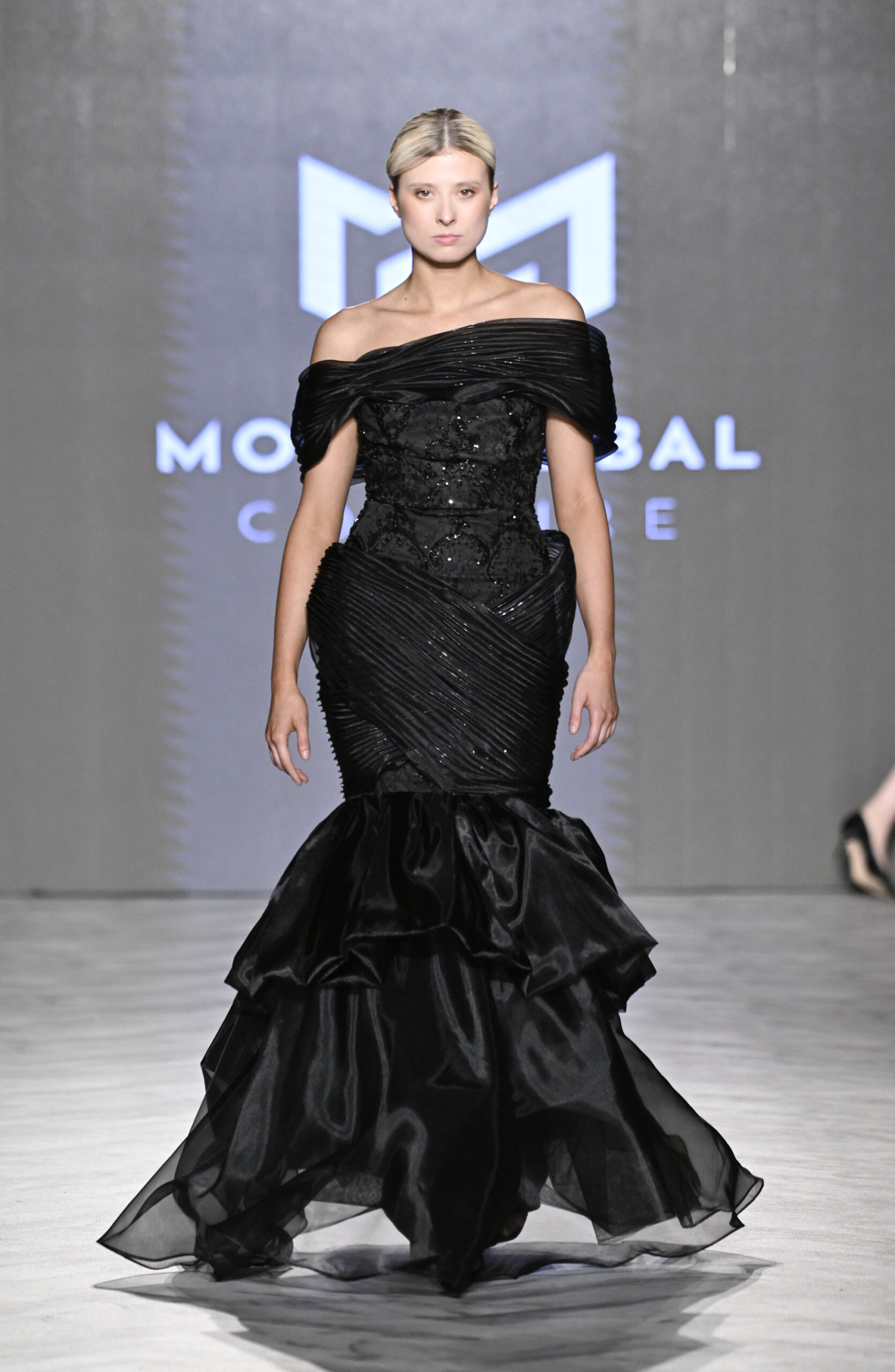
Moe Ghrbal Couture
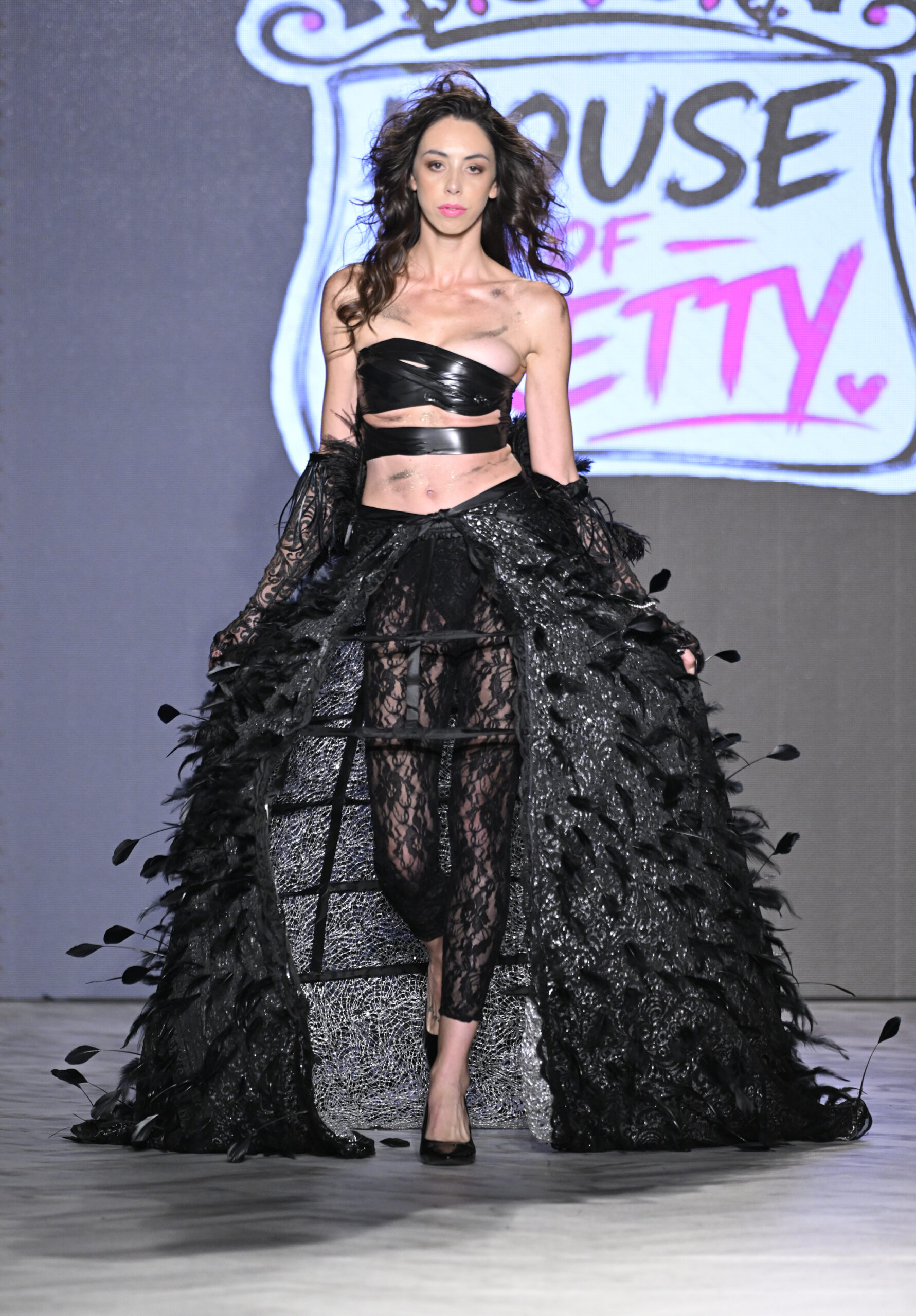
House of Pretty
Craftsmanship and Creative Freedom
Other collections placed material exploration and individual design processes at the forefront.
Franchesca Botha’s Loose Cannon combined 1990s grunge influences with repurposed textiles, draping and handmade embellishments. Roy Luo explored play and transformation in Toy Garden, incorporating deadstock fabrics into interchangeable garments.
MJL brought together intricate woven details, sculptural bodices and voluminous silhouettes, while JUMPER ZHANG, founded by Chinese designer Zhang Peng, emphasized refined tailoring, natural materials and contemporary elegance.
Across five days, Vancouver Fashion Week SS27 demonstrated how differently designers can approach the same medium. Whether drawing from heritage, technology, personal experience or traditional craftsmanship, the collections reflected a fashion landscape shaped by multiple perspectives rather than a single defining trend.
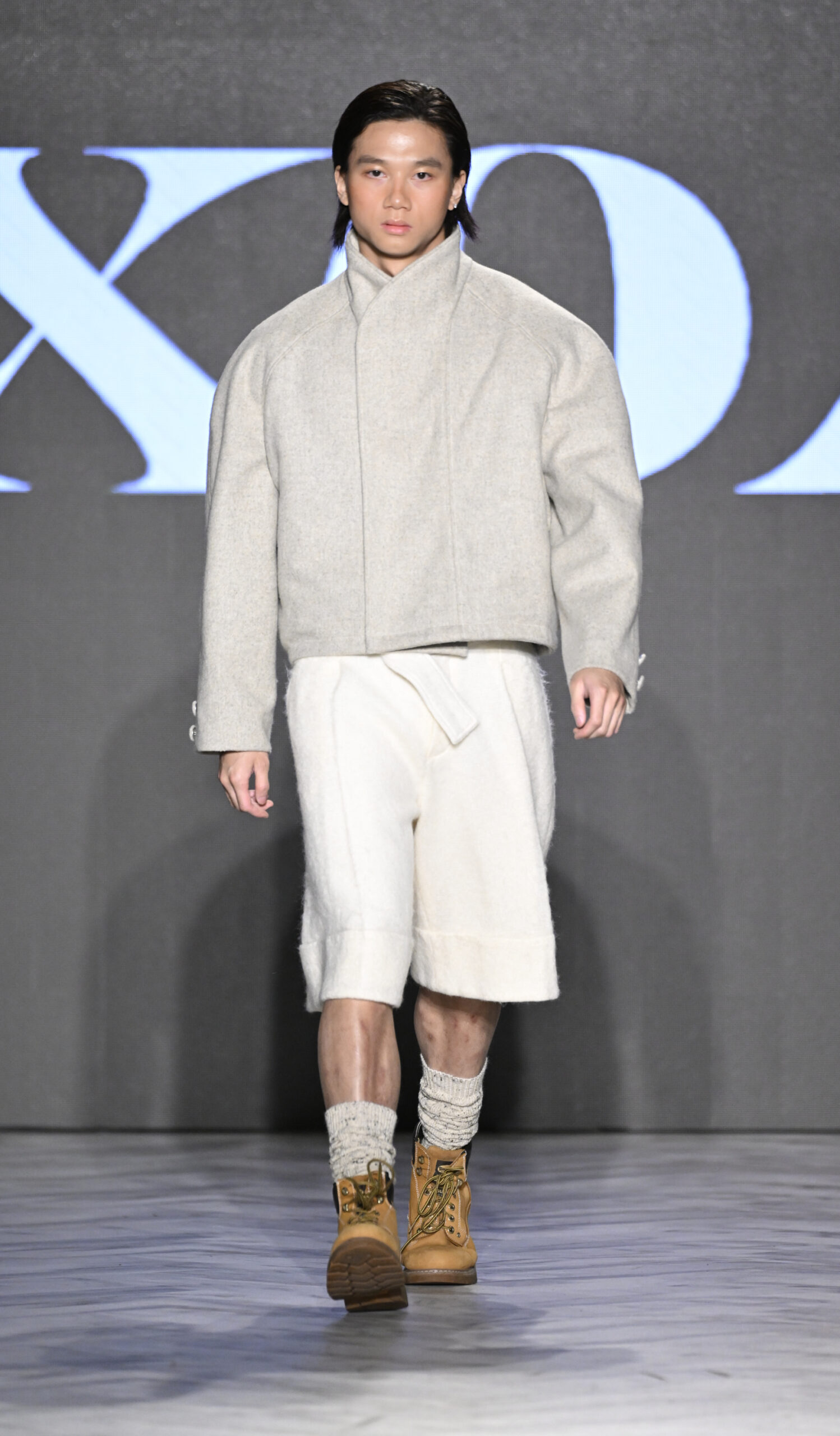
XOA
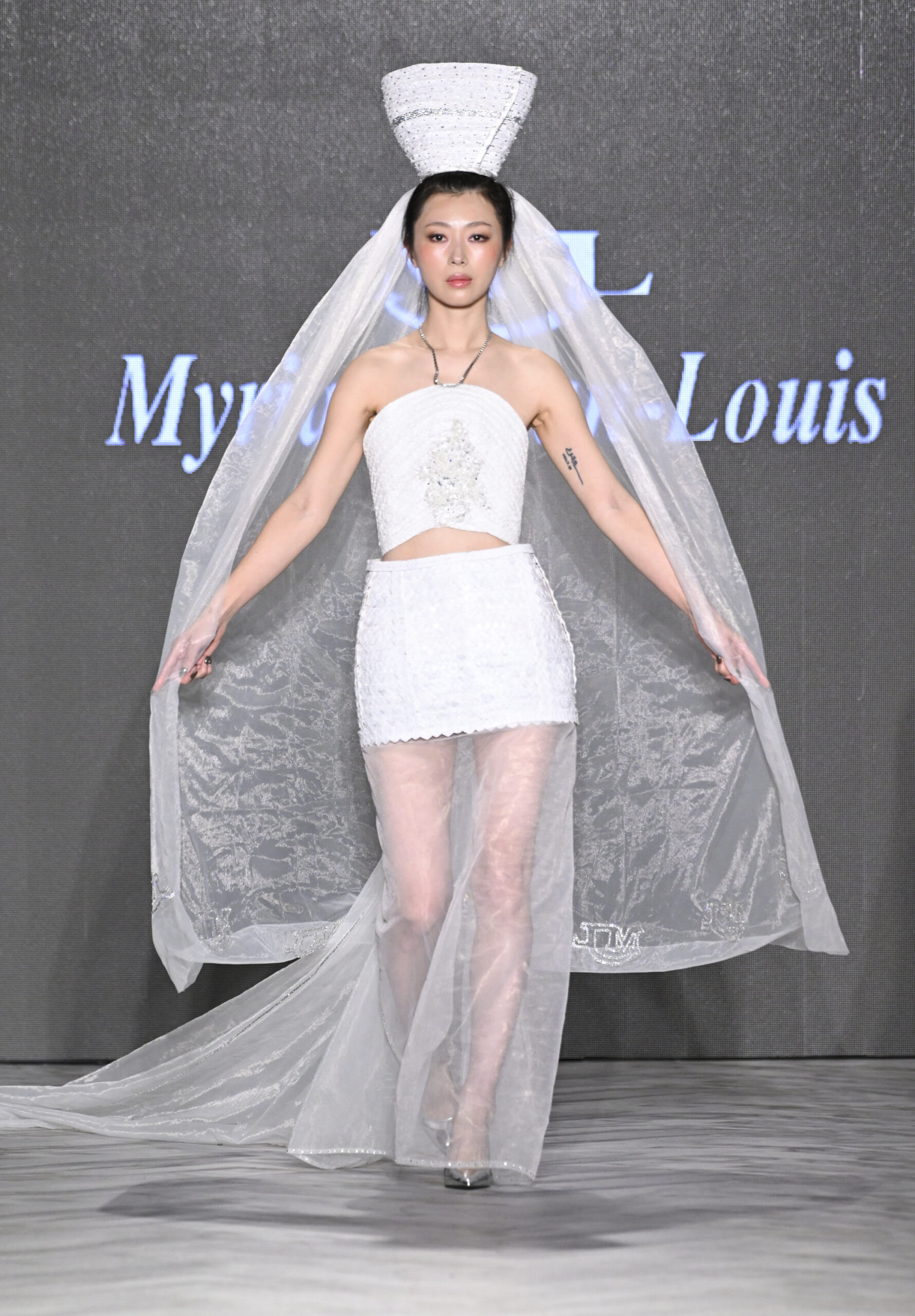
MJL
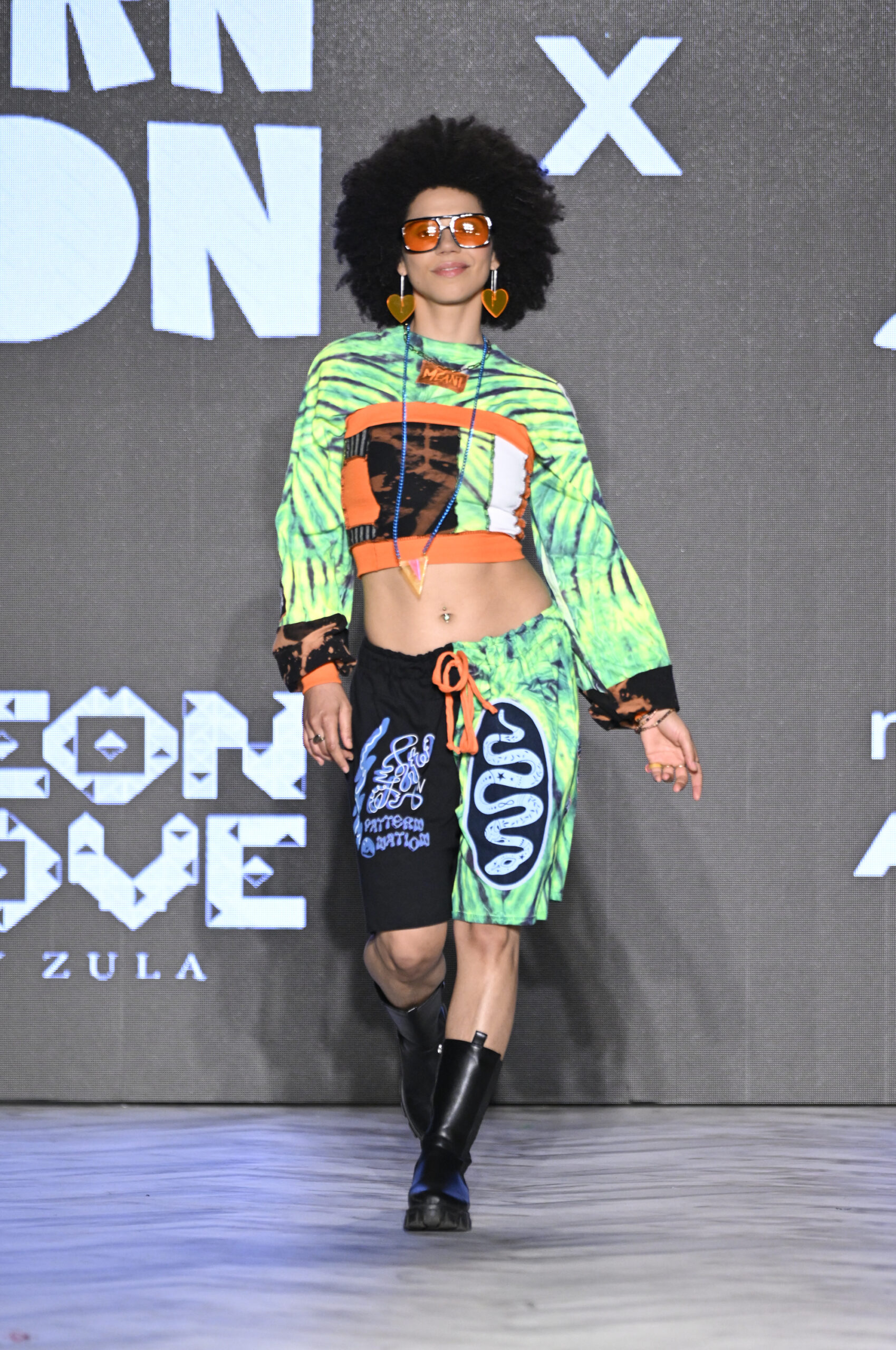
Pattern
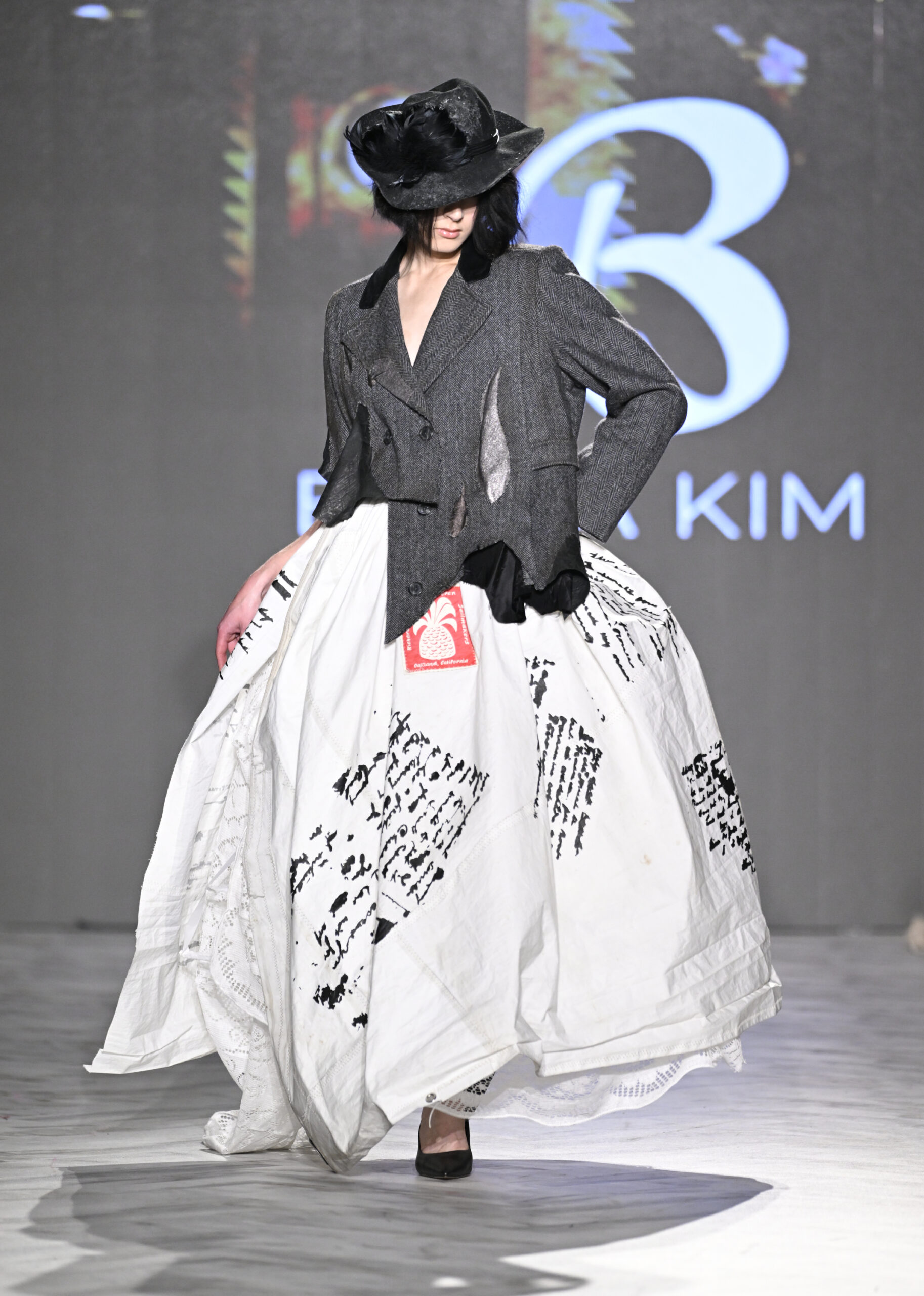
Bella Kim
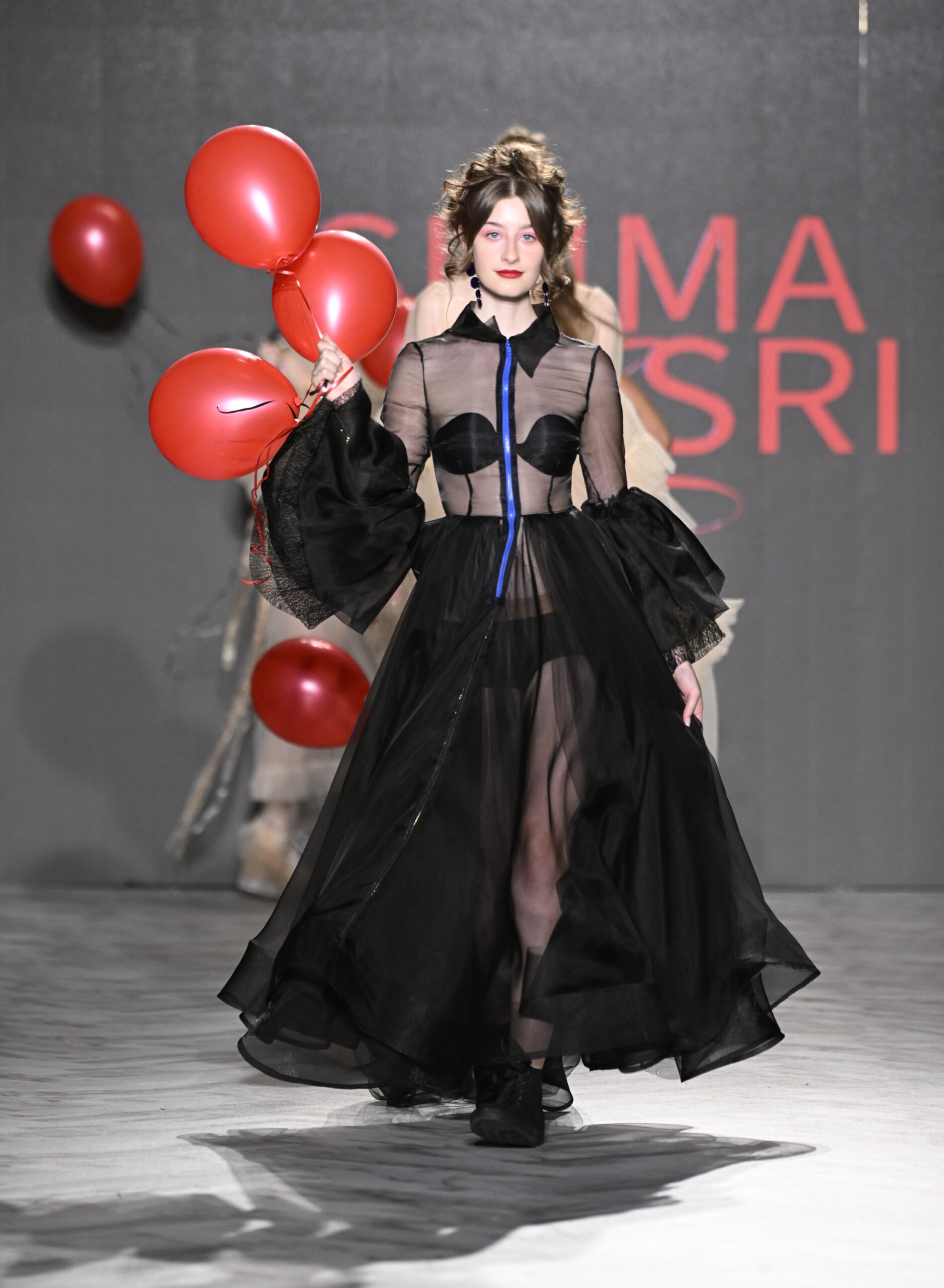
Shima Asri
Vancouver Fashion Week: @vanfashionweek
Official Watch Sponsor: @citizenwatchcanada
Key Hairstylist Lead: @OdeteDasilvaHair
Official Hair Sponsor: @goldwellca
Key Makeup Leads: @louise_kim | @cristinacuellar
Makeup Team: @institutocristinacuellar
Official Makeup Sponsor: @Cristinacuellarstore
Official Supporting Partner: @bosa_foods
Photography: Courtesy of Vancouver Fashion Week
By FashionX Magazine Team