


David Bolton: Finding Beauty in What We Leave Behind
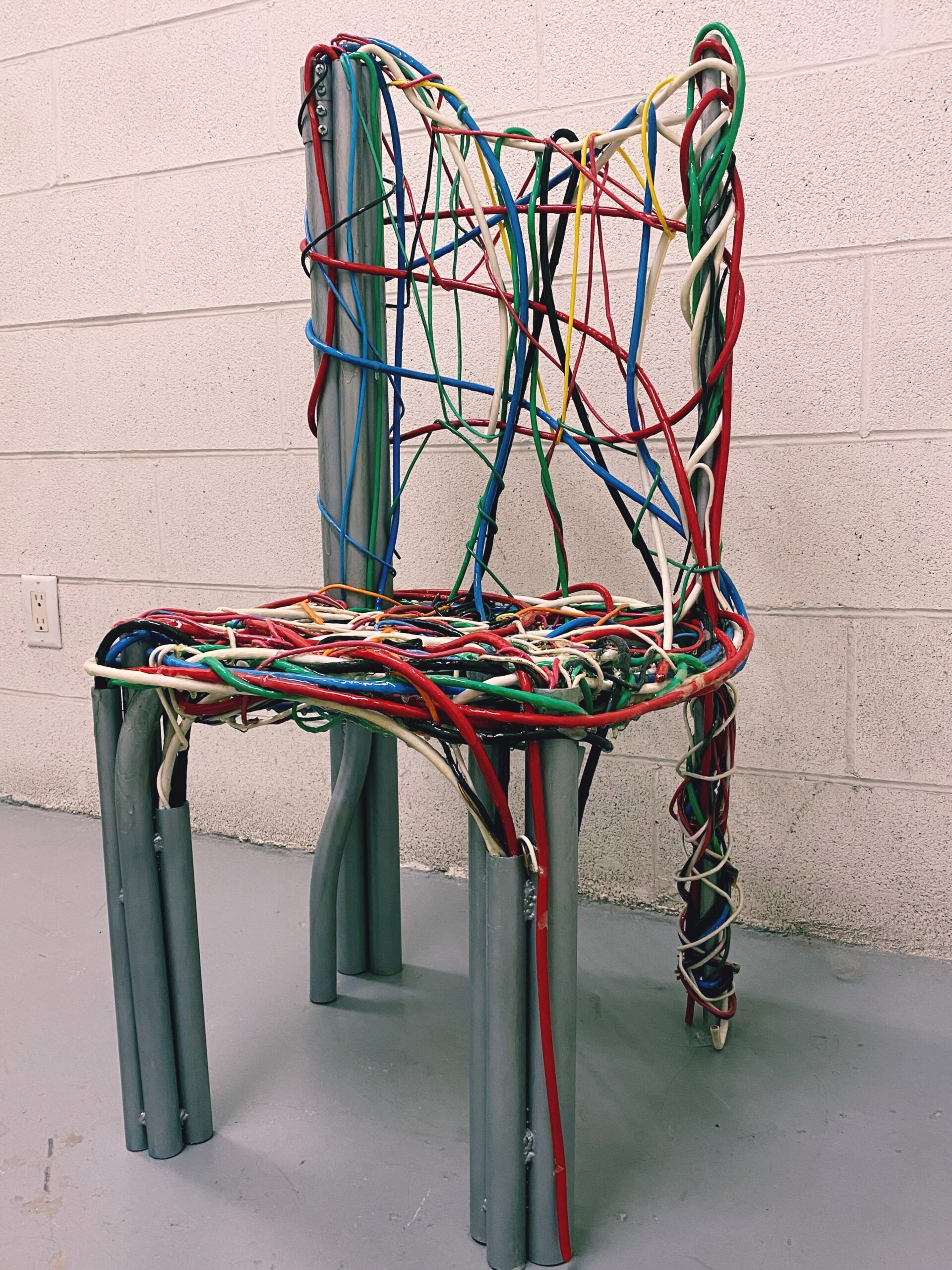 For David Bolton, art begins where others might see the end of an object’s story.
The Toronto-based artist, fabricator, and electrician spent decades working with automotive systems, electrical trades, fabrication, and industrial materials before that technical experience gradually evolved into a creative language of its own. Today, David transforms reclaimed mechanical components and industrial materials into hand-built sculptures — not by disguising their past, but by allowing it to become part of their new identity.
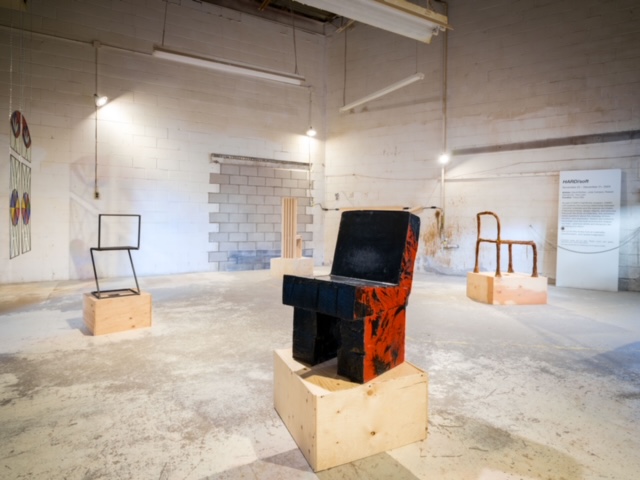
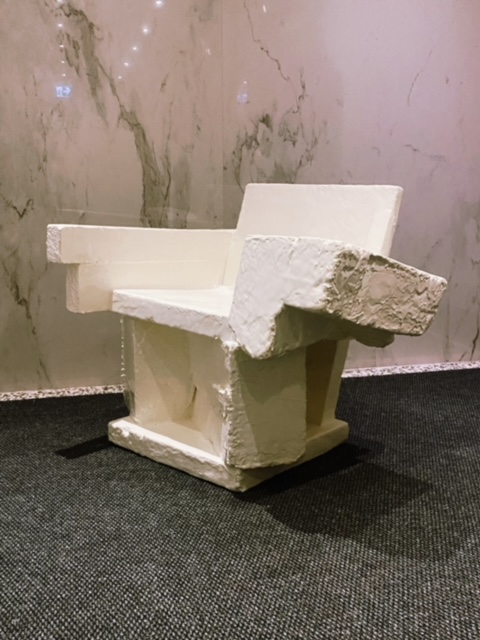
His work exists at the intersection of art and design: a chair remains a chair, a lamp still gives light, yet exposed connections, welds, signs of wear, and traces of a material’s former life no longer need to be concealed. Instead, they become part of the object’s character.
David describes this approach as “ornament through process” — a philosophy in which beauty is not added once an object is complete, but emerges through the act of making itself.
Working in collaboration with his wife, Melanie, who contributes to the development and refinement of each piece, David invites us to look differently at the things we have learned to consider obsolete.
FashionX spoke with David Bolton about his unconventional path from technical craftsmanship to art, the creatives who have shaped his perspective, the beauty of imperfection, and why sometimes a material isn’t finished — we’ve simply stopped imagining what else it could become.
Your path into art was rather unconventional. How did it begin?
I suppose it began with a lifelong curiosity about how things work. I’ve always been the kind of person who wants to take something apart, understand it, and then figure out what else it might become.
My career took me through automotive systems, electrical work, and fabrication, so I spent decades surrounded by tools, machinery, and mechanical components. Over time, I learned to appreciate not only how things function, but also the beauty in the way they’re constructed.
Eventually, I began bringing that way of looking at things into my creative work. I started experimenting with mechanical parts — cutting, assembling, connecting, and, when necessary, welding them into new forms.
There wasn’t one defining moment when I became an artist. It was more of a natural transition: the skills I had developed as a fabricator became a creative language, and I began to see construction itself as an artistic process.
 Who has had the greatest influence on your creative language?
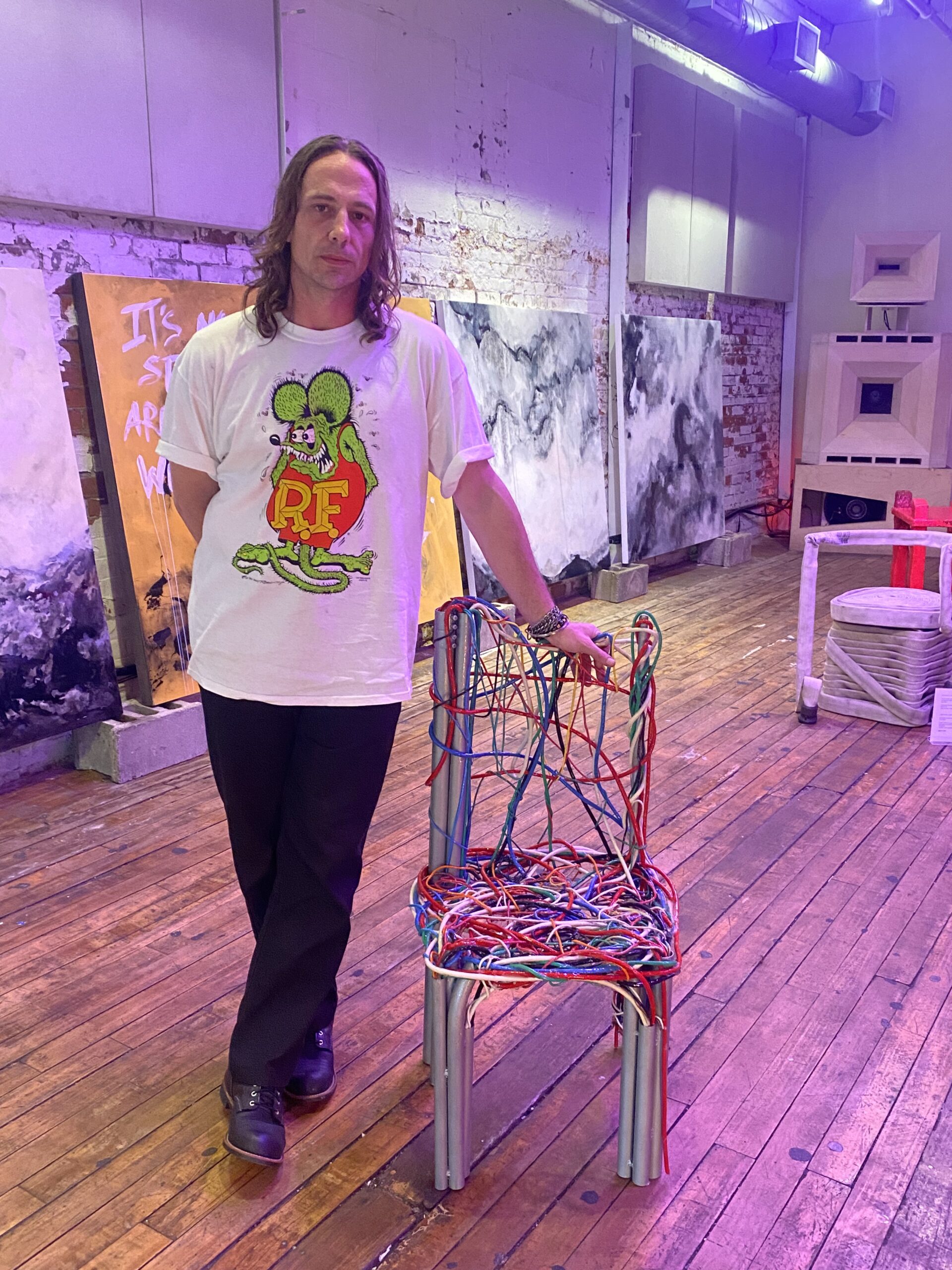
Scott Burton is probably the most important influence on my thinking. I love the way he blurred the line between sculpture and furniture: a chair can be an artwork, but it can also still be a chair.
I’m also fascinated by Gaetano Pesce, Carlo Scarpa, Gerrit Rietveld, Charlotte Perriand, and Eva Hesse, as well as Archizoom and the Memphis designers.
In fashion, Alexander McQueen has always been a huge inspiration — particularly his combination of craftsmanship, theatricality, beauty, and darkness. I’m also drawn to Rick Owens’ furniture and find Sruli Recht’s work endlessly fascinating.
What connects all of these influences is that they resist being placed neatly into a single category. Their work moves between art, design, fashion, and function. That space between disciplines is what interests me most.
Why did you choose to work with materials that others might consider waste?
I’ve always been fascinated by the potential hidden in things that have been discarded or overlooked.
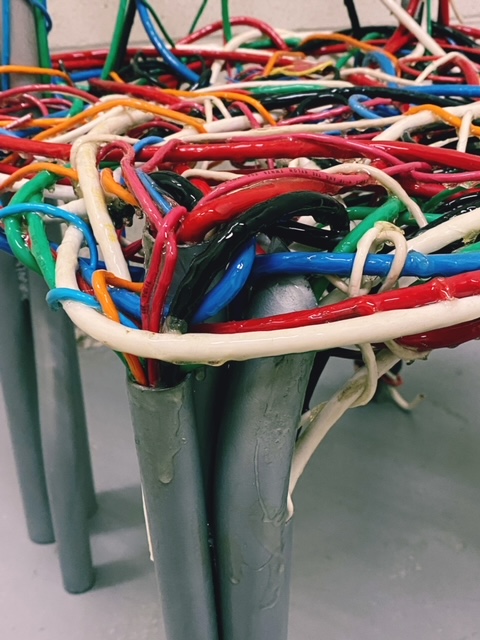
Industrial materials carry traces of use, labour, and time. Rather than seeing those marks as imperfections, I became interested in making them part of the work.
I’m also interested in challenging the idea of waste itself. Something that appears useless in one context can take on an entirely different meaning when placed in another.
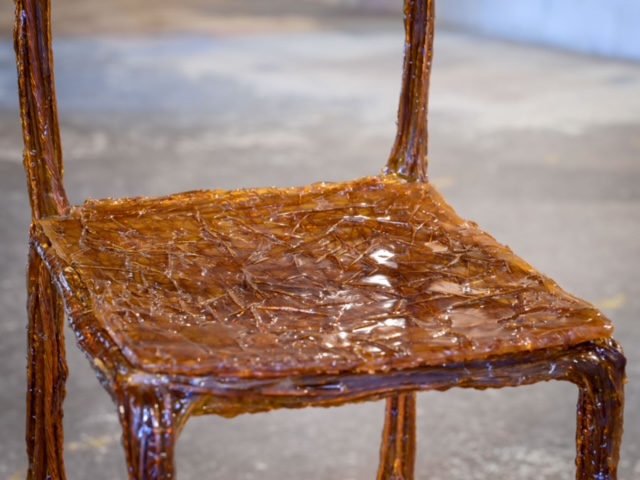
When you work with reclaimed materials, you’re not starting with a blank canvas. They already have their own character and limitations, and you have to respond to them. In that sense, the creative process becomes a kind of dialogue between the material and my own ideas.
 How do you choose the materials for a new piece?
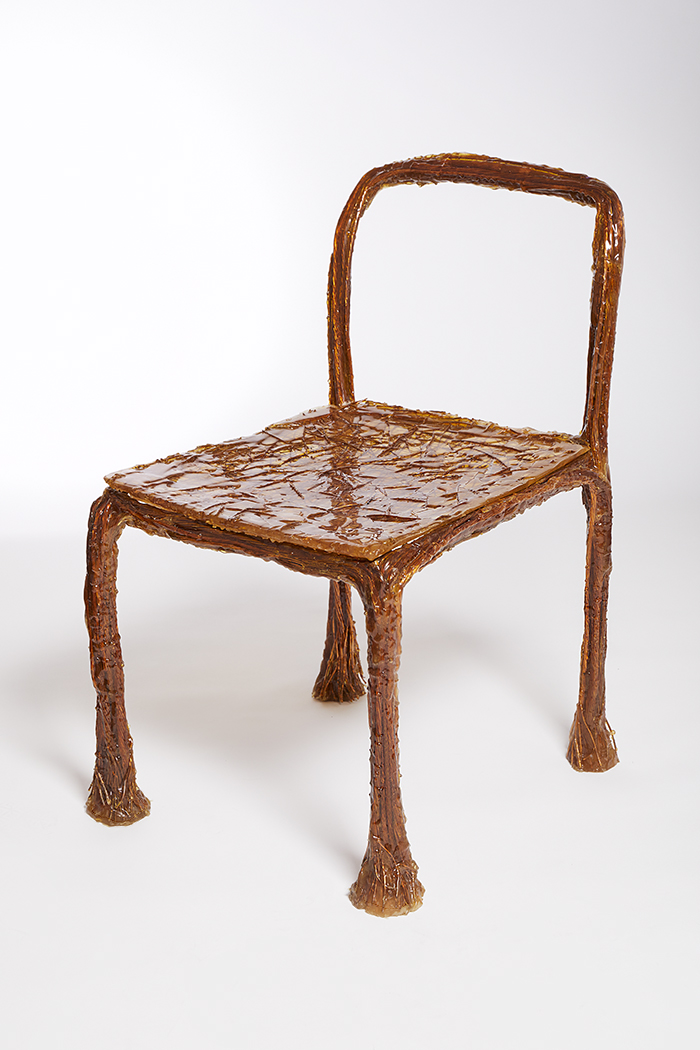
I’m very influenced by the idea of the readymade, particularly Duchamp, as well as the Castiglioni brothers’ approach to reimagining existing objects as art and functional components.
I’m often drawn to materials that are particularly difficult to recycle or biodegrade. Rather than pretending that something simply disappears once we throw it away, I’m interested in finding another existence for it.
Colour, texture, form, and familiarity also play an important role. I’m interested in taking something completely ordinary and shifting the way people see and value it.
What has your technical background brought to your art?
My years in the automotive, electrical, and manufacturing industries taught me to notice what often remains unseen — the systems, connections, and craftsmanship that allow an object to function.
I’ve always enjoyed challenging the idea that something technical and practical cannot also be beautiful. To me, function and aesthetics are not opposites.
That’s why my pieces retain a practical purpose. I’m interested in the moment when the construction required to make an object functional also becomes part of its aesthetic language.
You create your work with your wife, Melanie. What does that creative partnership look like?
Because we live with the pieces from the first idea through to completion, Melanie became part of the creative process very naturally.
We know each other’s instincts well enough to trust one another to take the lead on an idea, technique, or material without needing to control every stage of the process.
Often, one of us pushes an idea and the other responds, and the work gradually evolves through that exchange.
It’s also important that these objects quite literally live alongside us while they are being made. It allows us to experience them not only as sculptures, but as objects that exist within a real living space.
 You describe your philosophy as “ornament through process.” What does that mean to you?
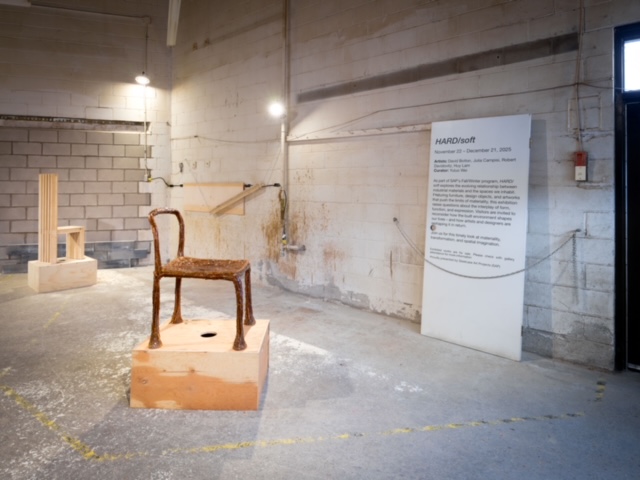
For me, it means allowing the way something is made to become its ornamentation.
The techniques, connections, and methods of construction are deliberately left visible rather than concealed. I’m not particularly interested in perfection. The marks, mistakes, and scars left behind through making can tell the story of how an object came to be.
I hope that embracing those imperfections might even inspire someone to make something of their own — to accept the mistakes, the unexpected moments, and maybe even the occasional cat hair.
Those traces of the process are ultimately what give a piece its character.
What would you like to change about the way we see the things we throw away?
I’d like people to see that a material doesn’t necessarily need to go through a long recycling process before we can recognise its value again.
And it isn’t only about packaging. It can be old furniture, clothing, tools, and countless other things we decide have reached the end of their useful lives.
Sometimes the material itself isn’t finished — we’ve simply stopped imagining what else it could become.
What are you exploring in your work right now?
Through my work, I’m fortunate to have access to what feels like an endless supply of industrial salvage, including materials that come out of fenestration testing.
Lately, I’ve been particularly interested in salvaged and broken glass.
It’s a fascinating material: beautiful and fragile, dangerous and architectural, while also being completely unforgiving.
I’m still figuring out exactly where working with it will take me. And that’s probably the most exciting part.
When someone encounters one of your works 50 years from now, what story would you hope it could tell?
In the 1970s, Frank Gehry created iconic chairs from laminated cardboard. Many of them have remained pristine, but to me, the most interesting ones are those that show decades of life.
Maybe the family dog gnawed off a corner. Maybe someone tried to repair one with glue or spray adhesive. Those are the objects with real character — the ones that show they were used, loved, and became part of someone’s life.
I’d like to think about my sculptures in the same way. Maybe 50 years from now, one of them will be damaged, but someone will care about it enough to repair it.
To me, that would be the ultimate compliment — knowing that an object had been used enough, loved enough, and lived with long enough to be worth repairing.
 Instagram: @zer0_feel | @dwb180
Photos courtesy of David Bolton
By Catherine Mills