

Decoding the Modern Wedding Guest Dress Code
From Semi-Formal to White-Tie: A guide to what to wear—and what to leave in the closet
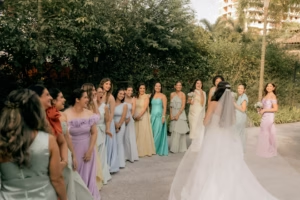
Image courtesy of Alexander Mass / Unsplash
Last year, at just twenty years old, I entered that stage of my life where my friends are starting to get married—the older ones, at least. Yet, amid the uncontrollable excitement I felt for my friends and their upcoming weddings, I couldn’t help but have a touch of wardrobe anxiety.
In the weeks leading up to each event, a million questions crossed my mind: What do I wear? How do I style it? What is the theme? Is there a dress code? When my first friend got married last year, I found myself scrambling around the mall, trying on countless dresses and frantically sending photos from the change rooms to my friends—some of whom weren’t even attending—asking for their opinions on what looked good, but more importantly, what was wedding appropriate.
If you are about to attend your first wedding or you simply need a refresher course, I have curated a simple guide to navigating wedding guest attire. It all starts with deciphering the wedding invitation. But before we dive in, here is a golden rule some might contest, but must be said: if you have to ask yourself if a dress has too much white in it, nine times out of ten, you should move on to the next option.
If you are struggling to understand the formality scale, you can find vital clues hidden within the invitation. More often than not, invitations will use key sartorial terms like “formal,” “black tie,” or “cocktail”—and these are exactly what you’re looking for. If you’re still confused by the different categories, here is a breakdown, starting from the most relaxed to the most formal dress codes typically found in wedding stationery.
Semi-formal
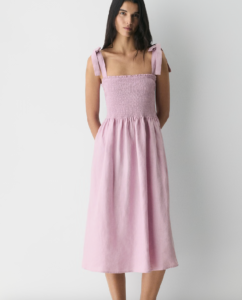
Image courtesy of Aritzia
Semi-formal is the most casual form of wedding attire—sometimes referred to in invitations as “dressy casual”. Unlike the rest of the categories, semi-formal has virtually no length restrictions for dresses and embraces lighter daytime fabrics like cotton and bold patterns. A timeless option for a semi-formal wedding includes Aritzia’s Golden Hour Linen Dress in Sweet Pea Purple. Often described as a step up from business casual, it maintains a polished and stylish look without veering into the overly ornate. However, if the invitation makes no mention of a specific dress code, an outdoor venue like a barn, farm, or any daytime setting is a good clue that the attire is semi-formal.
Cocktail
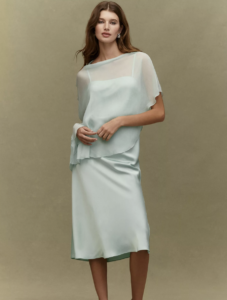
Image courtesy of Anthropologie
Arguably the most common and versatile dress code, cocktail distinguishes itself from semi-formal through hemline length and fabric. Usually reserved for an afternoon or evening event, cocktail is a step up from semi-formal—and no, that does not mean clothes you’d wear to a local cocktail bar. Think midi-length dresses and more elevated evening fabrics such as satin or high-quality linen like Anthropologie’s BHLDN Romy Satin Chiffon Cape Dress in Mint. Fortunately, bright colours and patterns are totally acceptable for this dress code.
Formal
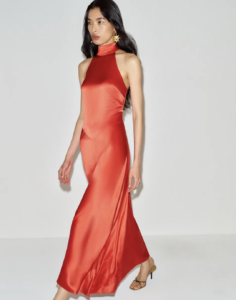
Image courtesy of Reformation
A sophisticated yet versatile dress code, formal is the third most elevated category, typically reserved for indoor, evening weddings. For this attire, you should opt for ankle-length dresses as the shortest permissible length, though you can remain relatively flexible with colour and fabric, making Reformation’s Katelyn Silk Dress in tango a great option. Formal attire allows for modern touches like slits, cutouts and low necklines making it the perfect, accessible style for a fancier wedding.
Black-Tie
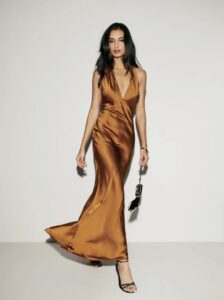
Image courtesy of Reformation
The second most formal and seemingly the trendiest dress code for weddings this year, black-tie has become increasingly popular, though it typically follows stricter expectations. Almost exclusively held indoors and at night, black-tie events often feature heavy paper invitations that explicitly state the dress code. Floor-length dresses, such as Reformation’s Daniela Silk Dress in copper, are absolutely non-negotiable, and, while not mandatory, many guests choose to wear darker or muted colours and avoid cutouts.
White-Tie
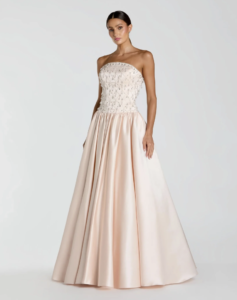
Image courtesy of Mac Duggal
The absolute pinnacle of formality and the most difficult dress code to achieve, white-tie takes formal weddings to the next level. Often reserved for state banquets, white-tie attire refers to an extremely regulated dress code with minimal to no exceptions. Floor-length, luxury-fabric ball gowns with fitted bodices and full skirts, like Mac Duggal’s Light Pink Embellished Strapless Ball Gown, are expected, accessorized with elegant jewellery, elbow-length gloves, and an up-do.
By Bree Robinson